Congratulations to Jennifer Lewis
Recipient of the 2025 Gold Key Award from Sigma Xi
By Carole H. Mezian
November 25, 2025
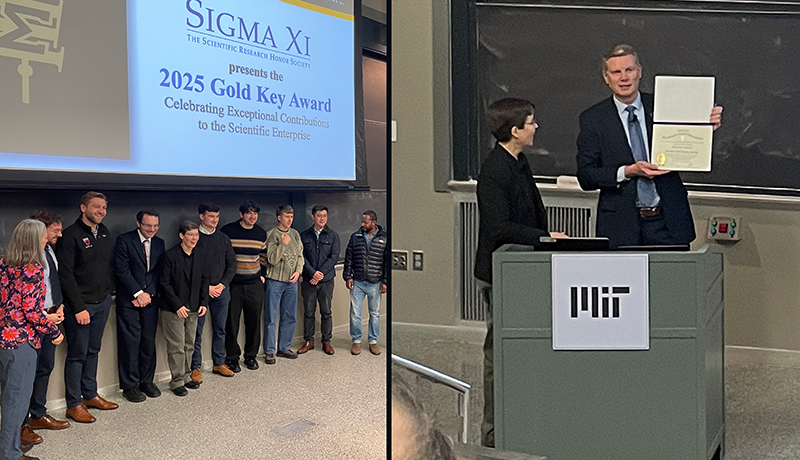
Congratulations to Professor Jennifer Lewis, the NSF-MRSEC @ Harvard researcher who focuses on IRG 1 in the Center, the Hansjörg Wyss Professor of Biologically Inspired Engineering at Harvard University's John A. Paulson School of Engineering and Applied Sciences, and a Core Faculty Member at the Wyss Institute for Biologically Inspired Engineering.
Jennifer was the recipient of the 2025 Gold Key Award from Sigma Xi—The Scientific Research Honor Society, where Lewis was celebrated at the Society's MIT chapter, and was originally initiated as a Sigma Xi member. She was honored with the Sigma Xi Gold Key Award for her extraordinary contributions to materials science, bioengineering, and additive manufacturing, which has not only advanced scientific knowledge, but also transformed industrial practices, influenced policy, and broadened access to scientific research and education across communities.
The Gold Key Award is the highest honor of the world's largest multidisciplinary honor society for scientists and engineers, and is presented to a member who has made "extraordinary contributions to their profession and fostered critical innovations to enhance the health of the research enterprise."
The symbolism of the Gold Key Award pays homage to the early days of Sigma Xi (late 1800s to early 1900s), when induction into the Society was often accompanied by the presentation of a small gold key. The key was routinely attached as a charm to a bracelet or chain that held a pocket watch, which was the style of the day, and represented pride in the science or engineering accomplishments of the holder.
Jennifer's quotes during the award ceremony:
- "I am deeply honored to receive the Gold Key Award from Sigma Xi," said Lewis. "It reflects the contributions of many talented students, postdoctoral researchers, and collaborators across multiple institutions."
- "I do want to share this quote from Jackie Robinson: ‘A life is not important except in the impact it has on other lives.‘… At the end of the day, I think when you look back on what really matters is the people that you've engaged with, people that you've learned from, people that you've helped along the way, hopefully mentored and helped them realize their own dreams."
- "My guiding principles have always been team first… I’ve also always emphasized quality over quantity… and trying to do science with integrity… there are many times where you’re going to be choosing between something that’s self-serving and something that’s more broadly serving… if you do things with integrity, most of the time you’re going to be choosing to do more broadly serving things… and I think that ends up in the long run being the right path."
- "I want to start with my high school teacher, Mrs. Kaldor, who was my English teacher, by the way, not science or math, but she believed in me at a very young age and remained a friend for many decades."
Among her multidisciplinary team of undergraduate, graduate, and postdoctoral researcher's innovations includes a multi-material 3D bioprinting method that enables the creation of thick vascularized tissues and 3D organs-on-chip. Her work on microscale 3D printing was highlighted as one of the 10 Breakthrough Technologies, "Organs on demand: 10 Breakthrough Technologies 2023, Engineered organs could put an end to trnsplant waiting lists." by the MIT Technology Review.
More about Jennifer Lewis
Jennifer Lewis, is a Hansjorg Wyss Professor of Biologically Inspired Engineering with the Harvard John A. Paulson School of Engineering and Applied Sciences (SEAS), and a Core Faculty Member at the Wyss Institute for Biologically Inspired Engineering. Professor Lewis' Research areas include: Applied Mathematics; Applied Physics; Bioengineering; Electrical Engineering; Environmental Science and Engineering; Materials and Mechanical Engineering; and Science, Technology, Innovation, and Public Policy.
Jennifer Lewis is a materials scientist recognized for her work on directed assembly of functional, structural and biological materials. Lewis was born in Daytona Beach, Florida and grew up primarily in North Carolina, Ohio, and Illinois. She attained her B.S. degrees in several areas including Physics, Mathematics, Electrical Engineering, and Computer Science, but graduated from the University of Illinois at Urbana-Champaign (UIUC) with a degree in ceramic engineering and from MIT in 1991 with a Sc.D. in ceramic science. She joined the faculty at UIUC in 1990, where she served as Director of the Frederick Seitz Materials Research Laboratory from 2006-2012. She joined the School of Engineering and Applied Sciences at Harvard University in 2013, where she currently holds the title of Wyss Professor of Biologically Inspired Engineering and serves as a core faculty member of the Wyss Institute. Her research resides at the intersection of materials science, advanced manufacturing, bioengineering and developmental biology.
Jennifer has made pioneering contributions to the programmable assembly of functional, structural, and living matter. She is an elected member of the National Academy of Sciences, the National Academy of Engineering, the National Academy of Inventors, and the American Academy of Arts and Sciences. She has co-founded four startups, and currently serves on multiple Scientific Advisory Boards.
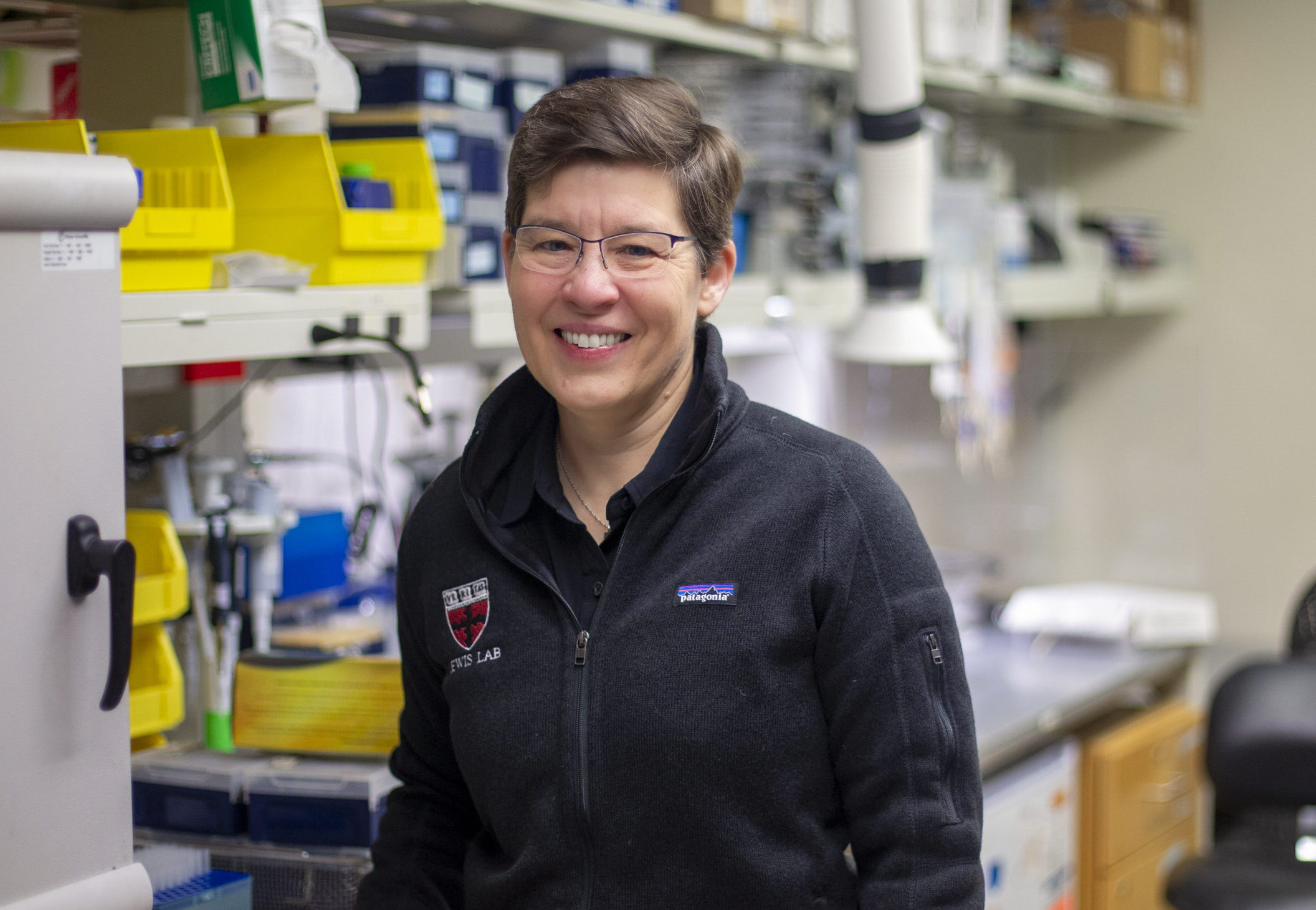
Jennifer Lewis Jennifer Lewis, Harvard University
Harvard's NSF-MRSEC IRG I: Programmable Multiscale and Multi-Material Control of Functional Soft Matter
At the Harvard MRSEC IRG I where Professor Lewis focuses her research, she has co-authored several papers affiliated with the NSF-MRSEC, including many papers listed with the Harvard MRSEC Publications 2020–2026.
Authorship, funding, disclosures
Sponsor of award: Sigma Xi, The Scientific Research Honor Society (ΣΞ)
Funding: Jennifer Lewis's research was partly supported by the U.S. National Science Foundation through the Harvard MRSEC DMR-2011754.
