Squishy Physics Seminar Prof. Amir Taghavy, UMass Dartmouth
6 - 7:30pm | Pearce Hall, Room 209
December 5, 2018
Squishy Physics Seminar Prof. John Hart, MIT
6 - 7:30pm | Pearce Hall, Room 209
Abstract: Abstract: Throughout history, innovations in manufacturing processes—such as movable type printing, and low-cost conversion of iron to steel—have catalyzed industrial growth and improved our standard of living. Now, additive manufacturing (AM) technologies, ranging from printing of low-cost electronics to automated assembly of large structures, promise to accelerate the scale-up of new products and reshape the constraints of supply chains. Motivated by this vision, I will first describe our research on high-resolution flexographic printing of electronic materials. Using nanoporous stamps comprising polymer-coated carbon nanotubes (CNTs) we achieve ultrathin micrometer-scale printing of colloidal inks, surpassing the resolution of industrial flexographic printing. We study the mechanism of ink transfer between liquid-filled CNT stamps and solid substrates, and develop guidelines for high-speed printing with controlled thickness. Second, I will highlight our work in extrusion AM—including a high-speed desktop 3D printer for rapid prototyping with polymers and composites, and a new technique for direct-write evaporative assembly of macroscopic colloidal crystals.
Bio: John Hart is Associate Professor of Mechanical Engineering, Director of the Laboratory for Manufacturing and Productivity, and Director of the Center for Additive and Digital Advanced Production Technologies (ADAPT) at MIT. John's research group, the Mechanosynthesis Group, aims to accelerate the science and technology of advanced manufacturing in areas including additive manufacturing, nanostructured materials, and the integration of computation and automation in process discovery. He has also co-founded three advanced manufacturing startup companies and launched the world's first massive open online course on manufacturing processes (MIT 2.008x on edX). John has been recognized by prestigious awards from the United States NSF, ONR, AFOSR, DARPA, ASME, and SME, by two R&D 100 awards, and most recently by the MIT Ruth and Joel Spira Award for Distinguished Teaching in Mechanical Engineering and the MIT Keenan Award for Innovation in Undergraduate Education.
December 3, 2018
Holiday Lecture Series Cooking is a Call to Act
7 - 8pm | Science Center Lecture Hall C
Abstract: Massimo Bottura (@MassimoBottura), Osteria Francescana in Modena, Italy, voted best restaurant in the world in 2018, founder of @foodforsoul_it
Materials Seminar Liqiang Mai, Wuhan University of Technology, China
3 - 4:00pm | Maxwell Dworkin Room 119
Abstract: Ever-growing energy needs and depleting fossil fuel resources demand the pursuit of sustainable energy alternatives. Accompanied by the development and utilization of renewable energy sources, efficient energy storage has become a key topic. Electrochemical energy storage devices are considered to be one of the most practical energy storage devices capable of converting and storing electrical energy generated by renewable resources, which are also used as the power source of electric vehicles and portable electronic devices. The ultimate goals of electrochemical energy storage devices are long lifespan, high safety, high power, and high energy density. This talk will focus on high-voltage cathodes, high-capacity anodes and solid electrolyte for next-generation rechargeable batteries. Meanwhile the issues and challenges for the key materials in rechargeable batteries will be summarized and addressed.
Liqiang Mai, Changjiang Scholar Chair Professor of Materials Physics and Chemistry, Distinguished Young Scholar of the National Science Fund of China, Dean for International Affairs of International School of Materials Science and Engineering at Wuhan University of Technology. He received Ph.D. degree from WUT in 2004 and carried out postdoctoral research in Prof. Zhonglin Wang's group at Georgia Institute of Technology (2006-2007). He worked as an advanced research scholar in Prof. Charles M. Lieber's group at Harvard University (2008-2011) and Prof. Peidong Yang's group at University of California, Berkeley (2017).
Prof. Liqiang Mai is mainly engaged in research field of nano energy materials and micro/nano devices. He has published over 290 papers tagged by SCI in leading journals such as Nature, Nat. Nanotechnol., Nat. Commun., Joule, Adv. Mater., J. Am. Chem. Soc., Angew. Chem. Int. Ed., Chem., Acc. Chem. Res., Energy Environ. Sci., etc. He has conducted more than 30 research projects as project principal such as National Basic Research Program of China, National Natural Science Foundation of China, etc. He is the winner of China Youth Science and Technology Award, and Guanghua Engineering Award, Nanoscience Research Leader award, etc. He is the guest editor of Adv. Mater., and serves on the Editorial and Advisory Boards of Joule (Cell press), Acc. Chem. Res., ACS Energy Lett., Adv. Electron. Mater., Nano Res., and Sci. China Mater.
November 28, 2018
Squishy Physics Seminar Yoav Green, T. H. Chan School of Public Health, Harvard University>
6 - 7:30pm | Pearce Hall, Room 209
Abstract: Nanochannels and nanopores are ubiquitous to nature and technology. They can be found in macroscopically large permselective membranes such as those used for desalination in electrodialysis systems, or small system such as cell membranes. The sub-micron scale in such systems allows them not only to desalinate water, harvest energy, and serve as highly sensitive bio-molecular detectors, but it also allows these nanochannels to behave as diode-like current rectifiers.
In nanofluidics systems, a nanochannel is typically connected to much larger microchannels/reservoirs. Until recently, in the nanofluidics community it was assumed that the effects of the microchannels is negligible. In this talk, I will present contradicting evidence to this assumption. I will then present a new modified paradigm which emphasizes the importance of the microchannels themselves as well as the microchannel-nanochannel interfaces. These new insights are extremely useful for designing new nanofluidic based systems.
To conclude, I will present my recent research in biomechanics that focuses on relating the kinematics of an epithelial monolayer of cells to its kinetics. As the epithelial monolayer migrates collectively, each constituent cell exerts intercellular stresses on neighboring cells and exerts traction forces on its substrate. The relationship between the velocities, stresses and tractions is fundamental to collective cell migration but it remains unknown. It will be shown that the observed dynamics does not conform to the simple and commonly assumed laws of a linear Hookean solid or Newtonian fluid. Rather the mechanics are much more complicated and likely because of the active nature of the cells. These findings are crucial for developing a deeper understanding of collective cellular behavior.
Bio: Yoav Green is currently a post-doctoral researcher in the Harvard T. H. Chan School of Public Health where he is working in the field of biomechanics. Before that Yoav received his PhD in mechanical engineering from the Technion - Israel Institute of Technology where his research fields were nanofluidics and electrokinetics. Yoav also holds a MSc in physics (astrophysics and astronomy) from the Weizmann Institute of Science, and BSc in aerospace engineering from the Technion.
November 27, 2018
Materials Today Publishing Seminar Materials Today Publishers and Editors
4:30 - 5:30pm | Pierce Hall 209
Abstract: In this session we will discuss the publishing landscape, including the varied roles of Authors, Editors, Referees, and Publishers in connecting communities. We'll take a look at research trends from a publishing perspective, and together will explore new and existing publishing issues; including ethics, article sharing, journal and article metrics, open access, article transfer, novel article formats, data sharing, and other essentials. In addition we will be joined my current Editors who can share best practices for publication in high impact journals such as Materials Today, including journal selection, article style & structure and article submission. The seminar will be presented by a collection of Publishers and Editors from Elsevier's Materials Today team and will conclude with a Q & A section. (https://www.materialstoday.com). Dr. Xingcai Zhang who serves as a Materials Today writer will lead the workshop/panel discussion.
Materials Today is a monthly peer-reviewed scientific journal, website, and journal family established in 1998 by Elsevier. Materials Today Journal covers all aspects of materials science and has an Impact Factor of 24.537. Besides Materials Today, Materials Today website covers more than 100 materials related journals published by Elsevier. It is a great opportunity to interact with Materials Today Publishers and Editors.
Abstract: Electrochemical energy storage has emerged as a critical technology to enable sustainable electricity generation by alleviating intermittency from renewable sources, reducing transmission congestion, enhancing grid resiliency, and decoupling generation from demand. Redox flow batteries (RFBs) are rechargeable electrochemical devices that store energy via the reduction and oxidation of soluble active species, which are housed in external tanks and pumped to a power-generating reactor. As compared to enclosed batteries, RFBs offer an attractive alternative due to decoupled power and energy, long service life, and simple manufacturing, but further cost reductions are needed for ubiquitous adoption.
Recent research has focused on the discovery and development of new redox chemistries. Of particular interest are low cost organic molecules and / or nonaqueous electrolytes with wide electrochemical windows, since decreasing materials cost and increasing cell potential offer credible pathways to lowering battery price. Though exciting, most of these emerging concepts only consider new materials in isolation rather than as part of a battery system. Understanding the critical relationships between material properties and overall battery price is key to enabling systematic improvements in RFBs. In this talk, I will discuss the use of techno-economic modeling as a guide for application-informed fundamental science to identify key technical hurdles, to highlight new research avenues, and, ultimately, to decrease time to commercialization.
November 12, 2018
Holiday Lecture Series From Low and Slow Smoking to High Heat Wok Cooking: Explore the Transfer of Heat and Application of Fire and Smoke. No Mirrors.
7 - 8pm | Science Center Lecture Hall C
STEAMeD - Workshops for Teachers, Part I
9:30am - 3:30pm
In partnership with the Young Chefs Program, the Materials Research Science & Engineering Center based at Harvard will offer two Saturday workshops for K12 teachers, community college faculty, and after school program leaders. These workshops will cover four topics, adapting lessons from the highly popular undergraduate-level course at Harvard and EdX, Science and Cooking: From Haute Cuisine to Soft Matter Science. Lessons include: Chili Infusions: Exploring solubility is so hot right now, Pickles: Not Your Basic Vegetable Tortillas: The Corny Processes of Polymer Crosslinking and Starch Gelatinization I Lava Science: Exploring Heat Diffusion through Molten Chocolate Cake
Abstract: I will present three problems on biophysics, low-cost diagnostic devices, and microfluidics. First, I will talk about a mathematical “T-swimmer” model, based on slender-body theory, that we developed to study how submillimeter-scale parasites swim in freshwaters to infect humans causing schistosomiasis, a disease comparable to malaria in global socio-economic impact. Juxtaposing this model with biological experiments and robotic prototypes, I will show how these parasites break time-reversal symmetry and propagate at an optimal regime for efficient swimming. Second, I will describe an ultralow-cost (20 cents), lightweight (2 g), human-powered paper centrifuge designed on the basis of a mathematical model of a nonlinear, non-conservative oscillator inspired by the ancient whirligig toy. Our centrifuge achieves speeds of 125,000 r.p.m., separates pure plasma from whole blood in less than 1.5 min and isolates malaria parasites in 15 min. Finally, I will talk about a microfluidic platform that performs universal logic operations with droplets. Through a reduced-order model and scaling laws for understanding the underlying physics, I will demonstrate droplet-based AND, OR, XOR, NOT, and NAND logic gates, fanouts, a full adder, a flip-flop and a finite-state machine.
November 5, 2018
Holiday Lecture Series Gastronomic Sciences: The Interdisciplinary Approach of the Basque Culinary Center to Research and Innovation
7 - 8pm | Science Center Lecture Hall C
Joxe Mari Aizega (@JMAizega), Basque Culinary Center Diego Prado (@diegopradovs), BCCinnovation Juan Carlos Arboleya (@JuanArboleya), Basque Culinary Center
Abstract: In this two-part talk, I will start by quickly introducing recently published results (https://doi.org/10.7554/eLife.34695) suggesting that above a critical strain microtubules become softer due to the flattening and eventual buckling of their cross-section (Brazier buckling). This result may be particularly relevant in light of ongoing debate in the literature regarding the mechanical properties of microtubules, with estimates ranging over several orders of magnitude. In the second part of my talk, I will discuss work that involves the same optical trapping setup, except we are now buckling a two-microtubule bundle (the second MT being depleted onto the first one and having one end free and the other trapped). We find that the second microtubule deadheres ('frays') with increasing buckling amplitude and eventually readheres ('heals') when the buckling amplitude is decreased again. This process is hysteretic, in that healing does not happen at the same strain as fraying. I will show that energy loss due to stress rearrangement at bonding/debonding events is responsible for hysteresis and examine how hysteresis size and onset depend on adhesion and elasticity parameters in both the discrete and continuum limits.
October 29, 2018
Holiday Lecture Series Let It Flow: Exploring Viscosity in Tate Dining Room & Bar
7 - 8pm | Science Center Lecture Hall C
Abstract: Vicky Lau Asia's Best Female Chef 2015, Tate Dining Room & Bar, Hong Kong
October 24, 2018
Holiday Lecture Series Going Down the Donut Hole...
7 - 8pm | Science Center Lecture Hall C
Wylie Dufresne (@WylieDufresne), Du's Donuts & Coffee, BK, formerly WD~50 Ted Russin (@CIACulinarySci) School of Culinary Science and Nutrition, Culinary Institute of America
October 24, 2018
Squishy Physics Seminar Prof. Luyi Sun, University of Connecticut
6 - 7:30pm | Pearce Hall, Room 209
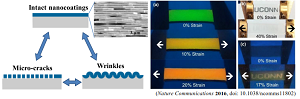
Abstract: In this presentation, nanocoatings with three distinct microstructures inspired by nature will be discussed. In the first part, organic/inorganic hybrid nanocoatings with a nacre-like microstructure generated via a facile co-assembly process will be presented. Thanks to the high concentration (up to 70 wt%) of well-aligned inorganic nanosheets and a well-integrated structure after crosslinking, such thin coatings exhibit exceptional mechanical, barrier, and flame retardant properties, while maintaining a high transparency. In the second part, inspired by marine organisms that can use muscle-controlled surface structures to achieve rapid and reversible changes in transparency, color, and patterns, a series of strain dependent mechanochromic devices will be presented. Utilizing microcracks generated via deformation-controlled surface-engineering, rigid nanocoatings affixed atop a soft substrate exhibit a broad range of mechanochromic behaviors with high sensitivity and reversibility. In the third part, a series of moisture responsive wrinkle dynamics inspired by human skin on a similar bilayer structure featuring different reversibility and stability will be discussed. These unique responsive dynamics result in the invention of a series of optical devices triggered by moisture, including anti-counterfeit tabs, encryption devices, water indicators, light diffusors, and anti-glare films. The above three biomimetic nanocoatings are promising for widespread applications.
October 22, 2018
Squishy Physics Seminar Uri Sivan, Technion-Israel Institute of Technology
3 - 4pm | MD, Room 119
Abstract: Recent advancements in atomic force microscopy facilitate atomic-resolution three-dimensional mapping of hydration layers next to macromolecules and solid surfaces. These maps provide unprecedented information on the way water molecules organize and bind these objects. Since the hydration structure governs the energetics of solvation and interactions between objects immersed in solution, the new data are invaluable when trying to resolve fundamental questions such as identification of molecular binding sites and interaction mechanisms. After a short presentation of our home-built microscope, characterized by sub 0.1 Å noise level, the talk will focus on three representative studies. The first one will disclose that water molecules grow epitaxially on certain crystalline substrates, forming 3d ordered structures extending to about 1 nm from the surface. The second study will present our recent success in obtaining ultra-high resolution images of DNA and 3d maps of its hydration structure (e.g., Fig. 1 below). This study shows that labile water molecules concentrate along the DNA grooves, in agreement with known position of DNA binding sites. The third case will disclose our recent discovery that in solutions in contact with atmosphere, hydrophobic surfaces are generically coated with a dense layer of condensed gas molecules with density close to that of liquid nitrogen. This layer not only renders the hydrophobic interaction a certain universality, but also identifies the source of hydrophobic attraction—one of the oldest puzzles of physical chemistry.
October 17, 2018
Squishy Physics Seminar Scott Manalis, Professor of Biological Engineering, Koch Institute for Integrative Cancer Research, MIT
6 - 7:30pm | Pearce Hall, Room 209
Abstract: I will present two projects where novel approaches are used to monitor phenotypic properties of single cells. The first focuses on single-cell mechanics, which are critical in processes such as tissue development and cancer invasion. However, monitoring mechanical changes of the same cell with high-temporal resolution remains challenging primarily due to invasiveness of the measurement. I will show that scattered acoustic fields from a living cell measured inside a fluid-filled vibrating microchannel is dependent on the cortex thickness and elastic modulus. By monitoring acoustic scattering with a temporal resolution of <1 min continuously throughout multiple generations in mammalian cells, we observe mechanical dynamics during mitosis on timescales that have previously been difficult to access. The second project focuses on circulating tumor cells (CTCs), which play a fundamental role in cancer progression. However, in mice, limited blood volume and the rarity of CTCs preclude longitudinal, in-depth studies of these cells using existing liquid biopsy techniques. To address this, we have devised a method for collecting CTCs from an un-anesthetized mouse longitudinally—spanning multiple days or weeks—to study acute perturbations (e.g. drug treatment) or potentially long-term phenotypes (e.g. tumor progression) within the same mouse. I will show that our microfluidic-based approach eliminates confounding biases driven by inter-mouse heterogeneity that can occur when CTCs are collected across different mice for single-cell RNA-Seq measurements.
October 15, 2018
Holiday Lecture Series Liquid Fire: the Science of Philippine Kinilaw
7 - 8pm | Science Center Lecture Hall C
Abstract: Margarita Forés (@MargaritaFores), Asia's Best Female Chef 2016, Cibo Restaurants, Manila, Philippines
October 10, 2018
Squishy Physics Seminar Perry Ellis, School of Physics, Georgia Tech
6 - 7:30pm | Pearce Hall, Room 209
Abstract: Active materials are driven far from the ground state by the motion of their constituent particles, thereby making them inherently non-equilibrium materials. For an active nematic, this results in a continuous creation and annihilation of +/- 1/2 topological defect pairs. Here, we confine an active nematic to the surface of a toroid and focus on how the curvature of the underlying surface couples to not only the topological charge but also to the topological defect density and creation and annihilation rates.
October 1, 2018
Holiday Lecture Series Gluten vs. Fiber: Innovative Approaches to Baking More Flavorful Bread
7 - 8pm | Science Center Lecture Hall C
Ayr Muir (@CloverFoodLab), founder & CEO of Clover Food Lab
September 26, 2018
Squishy Physics Seminar Hyunsik Yoon, Department of Chemical and Biomolecular Engineering, Seoul National University of Science & Technology
6 - 7:30pm | Pearce Hall, Room 209
Abstract: In Mother Nature, we can find lots of asymmetric features in insects, plants, and animals. The asymmetric structures show directional characteristics due to the difference of physical or chemical properties in directions. In this talk, directional wetting properties on asymmetric surfaces and clustering-and-recovering events of high-aspect-ratio asymmetric pillar arrays will be discussed.
September 24, 2018
Holiday Lecture Series The Science of Sugar
7 - 8pm | Science Center Lecture Hall C
Joanne Chang '91 (@jbchang), Flour Bakery and Café, Myers + Chang, author of "Flour," "Flour Too," "Myers + Chang at Home," and "Baking With Less Sugar"
Squishy Physics Seminar Wei Zhang, University of Massachusetts Boston
6 - 7:30pm | Pearce Hall, Room 209
Abstract: This presentation highlights our recent effort on the development of green and highly efficient methods for drug-like molecule synthesis and asymmetric catalysis. A series of technologies including fluorous technologies, multicomponent reactions, and organocatalysis are integrated to maximize reaction and separation efficiency in the synthesis of diverse heterocyclic scaffolds with substitution, skeleton, and stereochemistry variations. Through the collaboration with Harvard and other medical schools in US and Europe, our compounds have been integrated to a number of drug discovery programs. Several lead compounds have been developed for druggable targets such bromodomains (BET, CBP), kinases (PLK1), MDM2, PARP1&2, HIV-1, and RORgt targets which are related cancer, immune, inflammation, and other diseases.
September 17, 2018
Holiday Lecture Series ACID TRIP: Brightening Your Life, through Food, with Vinegar
7 - 8pm | Science Center Lecture Hall C
Gabriel Bremer La Bodega (Watertown) and former Salts Restaurant (Cambridge) Michael Harlan Turkellarlanturk), author of "Acid Trip: Travels in the World of Vinegar," "The Beer Pantry," and "Offal Good;" host on The Food Seen, HeritageRadioNetwork and Food52.com's BURNT TOAST podcast
Abstract: Hydrogel adhesion, integrating hydrogels with a variety of materials—from soft, living tissues to hard, rigid metals—has sparked unprecedented capabilities and advanced many emerging technologies in designing functional materials, biomedical applications, soft ionotronics and electronics, and robots. However, achieving strong hydrogel adhesion is fundamentally challenging. This talk presents the chemistry, mechanics and topology for strong hydrogel adhesion. I will highlight several our recently developed bonding methods, including molecular stitching, bridging and bonding, to strongly bond any type of hydrogel with other materials, and retain a soft and stretchable interface. Unlike traditional adhesion, our adhesion is programmable, and can be designed as permanent adhesion, transient adhesion, and triggerable de-adhesion. This method further inspires many diverse applications, ranging from strong tissue adhesives, wearable devices, to underwater adhesion.
September 10, 2018
Holiday Lecture Series Current Trends in Science and Cooking
7 - 8pm | Science Center Lecture Hall C
September 5, 2018
Squishy Physics Seminar Gilad Yossifon, Israel Institute of Technology
6 - 7:30pm | Pearce Hall, Room 209
Abstract: Utilization of active particles to transport both biological and inorganic cargo has been widely examined in the context of applications ranging from targeted drug delivery to sample analysis. Generally, carriers are customized to load one specific target via a mechanism distinct from that driving the transport. Here, we unify these tasks and extend loading capabilities to include on-demand selection of multiple nano/micro sized targets without the need for pre-labelling or surface functionalization. An externally applied electric field is singularly used to drive the active cargo carrier and transform it into a mobile floating electrode that can attract or repel specific targets from its surface by dielectrophoresis; enabling dynamic control of target selection, loading and rate of transport via the electric field parameters. Adding directed motion via magnetic stirring enables to develop these active particles into in-vitro assays with single cell precision and building blocks for bottom-up fabrication.
August 22, 2018
Squishy Physics Seminar Nadir Kaplan, Harvard University
5:30 - 7pm | Pearce Hall, Room 209
Abstract: Realizing next-generation materials with intricate shapes or complex signal processing abilities to perform adaptive functions greatly benefits inspiration from biological systems. In the first part of this talk, I will present a geometrical theory that explains the growth and form of carbonate-silica precipitates, which exemplify biomineralization-inspired formation of inorganic brittle microarchitectures. The theory predicts new assembly pathways of arbitrarily complex morphologies and thereby guides the synthesis of light-guiding optical structures. The second part will concern a soft matter analog of information storage and differentiation in living organisms, which constantly process dynamic environmental signals. Specifically, I will introduce a continuum framework of a hydrogel system that utilizes unique cascades of mechanical responses, transport and complexation of chemical stimuli to expand the sensing repertoire beyond standard hydrogels that rapidly equilibrate to their surroundings. Altogether, the confluence of theory and experiment enables the design of optimized hard or soft biomimetic materials for applications ranging from bottom-up manufacturing to soft robotics to data encoding.
August 15, 2018
Squishy Physics Seminar Andrew Wong, Harvard University
5:30 - 7pm | Pearce Hall, Room 209
Abstract: Rising demand for utility-grid and micro-grid energy storage has spurred rapid advancements in electrochemical energy storage systems. Aqueous organic redox flow batteries (AORFB) are among the technologies poised to catch this wave of innovation and discovery. This talk will include the historical progression of AORFB chemistries from acid, to alkaline, to neutral pH conditions. Advancements of these novel chemistries through enhancements in polymer ion exchange membranes, porous carbon electrodes, and fluid flow distribution will also be discussed. Finally, unique insights into AORFB enabled by optical techniques will shed light on future improvements waiting to be designed.
August 11, 2018
2018 Research Experiences for Undergraduates (REU) move out
August 8, 2018
Squishy Physics Seminar Luhan Ye, Harvard University
5:30 - 7pm | Pearce Hall, Room 209
Abstract: The power and energy density of a battery cell is quickly diminished by the inclusion of excess inactive materials. Given that the amount of inactive materials is directly determined by the number of battery layers, as each layer requires a separator and current collector, minimizing the number of layers is critical in optimizing the performance of a battery. It is shown here that ionic polymers can be utilized to drastically improve the thickness of each battery layer and, by extension, reduce the number of layers needed for a given total capacity. This is achieved by the ionic polymer enabling both improved ion conductivity and flexibility, the key limitations faced when maximizing electrode thickness.
Abstract: Over eons of evolution, biological systems have reached an unparalleled sophistication in their performance. The wide array of nano- and microscale entities in nature, from spiral-shaped bacteria to biconcave red blood cells, hints at the importance of shape in biology. Furthermore, the distinct features like size and rigidity of these cells are very crucial to carry out their native functions. Inspired by these cues, we are developing various polymer-based biomimetic carriers for targeted drug delivery. This talk will shed light on our lab's contribution in understanding the effect of physico-mechanical parameters of polymeric particles in drug delivery (uptake, circulation, targeting, etc.). The discussion will also focus on application of these fundamental findings for the treatment of cancer and cardiovascular disorders.
July 25, 2018
Squishy Physics Seminar Frans Spaepen, Harvard University
5:30 - 7pm | Pearce Hall, Room 209
Abstract: Colloidal particles, being large and slow and hence trackable in the confocal microscope, can be used to gain insight into complex problems in materials science on the particle (i.e., atomic) level. This talk will be an informal survey of the many projects in our long-standing collaboration with the Weitz group to exploit this technique: the deformation of amorphous materials, the motion of dislocations, the kinetics of solidification, the observation of crystal nucleation, the dynamics and stiffness of the solid-liquid interface, the structure and dynamics of grain boundaries,... With lots of pictures and movies.
July 18, 2018
Squishy Physics Seminar Felix Wong, Harvard University
5:30 - 7pm | Pearce Hall, Room 209
Abstract: Protein filaments that bind to curved membranes and translocate in directions determined by principal membrane curvatures exhibit rich behavior, as suggested by prior studies on bacterial filament systems. Here we model the direct binding of protein filaments to membranes and show that it is energetically favorable for filaments to orient in a manner compatible with their intrinsic curvatures. We then model the curvature-based translocation of an ensemble of filaments and show that their macroscopic properties, such as localization, can vary significantly depending on membrane geometry. Finally, we discuss the implications of our study to bacterial morphogenesis and regulation of rod shape by the bacterial actin homolog MreB. Our work introduces general methods likely to be of interest to both biologists and physicists.
This work is carried out in collaboration with Ethan Garner (MCB).
Abstract: The formation of a viral capsid—the highly-ordered protein shell that surrounds the genome of a virus—is the classic example of self-assembly in biology. As far back as the 1950s and 1960s, researchers have been reconstituting viral capsids in the laboratory simply by mixing together the viral coat proteins and genome molecules. The high yields of proper capsids that assemble in such experiments is remarkable, given the complexity of the structures.In this talk, I will describe our ongoing efforts to understand the kinetics of viral capsid assembly by monitoring the formation individual capsids. In our experiments, we inject a solution of viral coat proteins over a glass coverslip on which viral RNA strands are tethered to the surface. Using an optical technique called interferometric scattering microscopy, we measure how many proteins bind to each RNA as a function of time. Our measurements reveal some new features of the assembly process—such as an initial nucleation step, and the possibility of subsequent nucleation steps—that may help us understand how viruses regulate the assembly of correct capsids, and also how assembly can go awry.
June 27, 2018
Squishy Physics Seminar David Nelson, Harvard University
5:30 - 7pm | Pearce Hall, Room 209
Abstract: The interplay between fluid flows and living organisms plays a major role in the competition and organization of microbial populations in liquid environments. Hydrodynamic transport leads to the dispersion, segregation or clustering of biological organisms in a wide variety of settings. To explore such questions, we have created microbial range expansions in the laboratory by inoculating two identical strains of S. cerevisiae (Baker's yeast) with different fluorescent labels on a nutrient-rich fluid 10^4 to10^5 times more viscous than water. The yeast metabolism generates intense flow in the underlying fluid substrate several times larger than the unperturbed colony expansion speed. These flows dramatically impact colony morphology and genetic demixing, triggering in some circumstances a fingering instability that allows these organism to spread across an entire Petri dish within two days. We argue that yeast colonies create fluid flow by consuming nutrients from the surrounding fluid, decreasing the density of the substrate fluid, and ultimately triggering a baroclinic instability when the fluid's pressure and density contours are no longer parallel. Our results suggest that microbial range expansions on viscous fluids will provide rich opportunities to study the interplay between advection and spatial population genetics.
Work carried out in collaboration with Severine Atis, Bryan Weinstein and Andrew Murray
Abstract: The interactions between cells and the surrounding extracellular matrix (ECM) help guide key processes such as cell spreading, proliferation, and differentiation. The mechanochemical communication between cells and their microenvironment is highly dynamic and complex. For organs such as the lung and the heart, strain and its frequency are crucial parameters for tissue function. Understanding the dynamic relationship between a single cell and its microenvironment is key to deciphering tissue level complexity. Our understanding of mechanotransduction so far has mainly relied on static models which are insufficient in fully recreating the dynamic microenvironment. Recent studies involving dynamic models have shown that externally applied forces can actively guide cellular processes. However, the influence of frequency and magnitude of applied forces on cellular mechanoresponses and their downstream effects are not well understood. In this talk, I will present a dynamic approach to studying mechanotransduction at the single cell level. I will first introduce an optically responsive artificial ECM which contracts under near-infrared (NIR) light and relaxes rapidly when the light is turned off. This approach allows for precisely confined actuation of the optically responsive ECM around a single cell. I will then discuss how locally applied cyclic stretching affects two cellular mechanoresponses, namely the nuclear translocation of a mechanoresponsive transcriptional regulator and the triggering of stretch activated ion channels.
Abstract: Soft robots comprising several inflatable actuators made of compliant materials have drawn significant attention over the past few years because of their ability to produce complex motions through nonlinear deformation. Their design simplicity, ease of fabrication and low cost sparked the emergence of soft robots capable of performing many tasks, including walking, crawling, camouflaging and assisting humans in grasping, suggesting new paths for space exploration, biomimimetics, medical surgery and rehabilitation. However, to achieve a particular function existing fluidic soft robots typically require multiple input lines, since each actuator must be inflated and deflated independently according to a specific preprogrammed sequence.
An interesting avenue to reduce the number of required input signals is the direct exploitation of the highly nonlinear behavior of the system without the introduction of additional stiff elements. In this talk I will present three different strategies that we have recently explored to achieve this. First, I will show that a segmented soft actuator reinforced locally with optimally oriented fibers can achieve complex configurations upon inflation with a single input source. Then, I will demonstrate that the non-linear properties of flexible two-dimensional metamaterials are also effective in reducing the complexity of the required input signal. Finally, through a combination of evolutionary optimization and experiments I will show that fluid viscosity in the tubes can be harnessed to design fluidic soft robots capable of achieving a wide variety of target responses through a single input.
Abstract: Polymer flooding is one of the most economically viable methods for enhanced oil recovery. By flowing a small volume of polymer solution into the reservoir, after an initial recovery by water, a considerable additional amount of oil is recovered. However, the commonly accepted mechanisms for the enhanced recovery based on viscoelastic properties of the polymer solution are inadequate to explain the enhanced recovery observed in all different conditions. We use confocal microscopy to investigate the origin of polymer enhanced oil recovery by measuring the velocities of the displacing fluid around trapped oil in a 3D micromodel of porous media. A completely different mechanism for improved recovery is observed. Polymer retention in the pore space results in highly heterogeneous changes in the velocities of the displacing fluid and in some pores provides large enough viscous pressure to mobilize the trapped oil ganglia. Our pore level measurements provide new insights into the origin of polymer enhanced recovery.
June 4, 2018
2018 Research Experiences for Undergraduates (REU) move in
May 30, 2018
Squishy Physics Seminar Mark Skylar-Scott, Harvard University
5:30pm | Pearce Hall, Room 209
Abstract: Knots occur naturally in biological DNA, a phenomenon relevant for cellular genome organization Direct ink writing (DIW) can be used to deposit viscoelastic inks into three-dimensional multimaterial architectures. Using inks that range from ceramics to biological tissues, DIW is uniquely capable of driving technological development in 3D printing from ‘printed form', towards ‘printed function'. However, the exploration of potential architectures is critically limited by the low throughput of DIW; for a constant filament diameter and print speed, the print time increases with the cube of the size of the printed part. Here, we use stereolithography to manufacture multimaterial multinozzle 3D (MM3D) printheads that enable the rapid construction of multimaterial architectures. We demonstrate 1D and 2D arrays of multimaterial nozzles, each capable of generating continuous filaments that switch materials at up to 50 Hz. We derive and experimentally validate an analytical model to predict the print parameter space in which MM3D nozzles can operate. Using these MM3D printheads, we generate a Miura origami fold using patterns of stiff and soft epoxy inks which vary in stiffness by almost four orders of magnitude. This MM3D system promises to enhance the scalability of multimaterial DIW, particularly for inks with limited pot-lives.
May 17, 2018
Squishy Physics Seminar Matan Yah Ben Zion, NYU - Center for Soft Matter Research
2:00pm | Cruft Hall, Room 309
Abstract: Although stereochemistry has been a central focus of the molecular sciences since Pasteur, its province has previously been restricted to the nanometric scale. I will present our approach of combining DNA nanotechnology with colloidal science to program the self-assembly of micron-sized clusters with structural information stemming from a nanometric arrangement. We bridged the functional flexibility of DNA origami on the molecular scale, with the structural rigidity of colloidal particles on the micron scale, by tuning the mechanical properties of a DNA origami complex. We demonstrate the parallel self-assembly of three-dimensional micro-constructs, evincing highly specific geometry that includes control over position, dihedral angles, and cluster chirality. I will end my talk describing two recent projects where we used these techniques to synthesize and study active systems: light driven fluid micro-particles, and sedimenting irregular clusters.
May 16, 2018
Squishy Physics Seminar Alex Klotz, MIT
5:30pm | Pearce Hall, Room 209
Abstract: Knots occur naturally in biological DNA, a phenomenon relevant for cellular genome organization as well as genetic sequencing technology. Knotted DNA molecules serve as a model experimental system for polymer entanglement, where fluorescent microscopy can be used to study polymer dynamics on the individual chain level. To study the dynamics of knots in DNA, we induce knotting in viral DNA using an electrohydrodynamic instability and stretch the molecules with a divergent electric field in a microfluidic channel, analogous to elongational flow. I will discuss some recent results from our experiments and simulations, including the effect of knots on the entropic elasticity of a stretched molecule, the motion of knots along elongated molecules, and the process by which knots untie as they reach the end of the molecule.
May 2, 2018
Squishy Physics Seminar John Hart, MIT
5:30pm | Pearce Hall, Room 209
April 11, 2018
Squishy Physics Seminar Martin Lenz, CNRS (Paris, France) The Laboratory of Theoretical Physics and Statistical Models
5:30pm | Pearce Hall, Room 209
Abstract: Controlling the self-assembly of supramolecular structures is vital for living cells, and a central challenge for engineering at the nano- and microscales. Nevertheless, even particles without optimized shapes can robustly form well-defined morphologies. This is the case in numerous medical conditions where normally soluble proteins aggregate into fibers. Beyond the diversity of molecular mechanisms involved, we propose that fibers generically arise from the aggregation of irregular particles with short-range interactions. Using minimal models of frustrated aggregating particles, we demonstrate robust fiber formation for a variety of particle shapes and aggregation conditions. Geometrical frustration plays a crucial role in this process, and accounts for the range of parameters in which fibers form as well as for their metastable, yet long-lived character.
April 4, 2018
Squishy Physics Seminar Prof. Jia Niu, Department of Chemistry, Boston College
5:30pm | Pearce Hall, Room 209
Abstract: Synthetic polymers as biomaterials have attracted significant research and development efforts in the recent years. Compared to the biological counterparts, synthetic polymers can provide improved physical, chemical, or mechanical properties as well as the capability to actively manipulate biological functions. However, traditional synthetic polymer biomaterials are still primarily used as crosslinked matrices, limited by the lack of defined polymer structures and low polymer grafting efficiency. The overall goal of our research is to expand the controlled polymerization techniques towards improved biocompatibility and the mimicry of biopolymers. In this seminar, two examples will be presented. First, a rapid controlled radical polymerization technique is described. In situ NMR monitoring confirmed the kinetics of this reaction and its spatiotemporal control over polymerization by light. Using this technique, synthetic polymers with narrow polydispersity (PDI < 1.3) were generated in aqueous solution at room temperature. The rapid reaction kinetics of this CRP enabled direct cytocompatible polymerization from chain transfer agents (CTAs) immobilized on the surfaces of live yeast and mammalian cells, as shown in the second example. High (>90%) cell viability and non-impaired cell functions, including cell propagation and signaling transduction, were observed for polymer-modified cells. Incorporation of various functional groups in the cell surface-initiated synthetic polymers was shown to enable post-polymerization functionalization of cell surface and mediate cell-cell interaction. These preliminary results serve as the initiators for our efforts towards applying synthetic polymeric system in various biotechnological applications, such as live cell-based sensing or catalytic systems, programmable cell assembly, and engineering cell surface with molecular or nano-scale structures.
MCB Harvard Seminar M. Lisa Manning, Ph.D., Associate Professor of Physics, Department of Physics and Soft and Living Matter Program, Syracuse University
1:0pm | Biological Labs 1080, 16 Divinity Avenue, Cambridge
Modeling Physical Forces at Large Scales to Discover Molecular Mechanisms in Cell Biology
March 28, 2018
Squishy Physics Seminar Dr. María L. Jiménez, Department of Applied Physics, University of Granada (Spain)
5:30pm | Pearce Hall, Room 209
Abstract: In the last decades, a great effort has been devoted to control the size, geometry and internal morphology of nanoparticles. In many practical situations, such systems are suspended in aqueous media. If this is the case, nanoparticles usually acquire surface charge, and this also determines their behavior. Both size and charge in aqueous media are usually characterized by scattering techniques. While these methods are well established, there are multiple situations in which they provide limited information. For instance, the size is not well measured when the particles are highly non-spherical. With respect to the electric properties, scattering methods provide a single characteristic quantity, the zeta potential. Hence, they cannot characterize the behavior of more complex systems, such as soft particles, soft coated particles, non homogeneous surface charge, etc. Finally, only dilute suspensions can be measured with these techniques, which is not always the desired situation.
In this talk I will show a different approach: the measurement of the electric permittivity and electric birefringence spectra of suspensions. These quantities are directly related to the polarization of the particles: under the action of electric fields, particles polarize by different mechanisms that manifest in separated frequency regimes, depending on the particle size, geometry and the electric properties of the interface particle/solution. We will show that the electric permittivity spectra provide the particle size, aggregation state and surface charge in the case of concentrated suspensions. On the other hand, the electric birefringence is very sensitive to the particle geometry and charge distribution as compared to standard techniques based on the light scattered by the particles. In particular, we will show that it is an excellent tool to obtain the size distribution in the case of non spherical particles.
March 21, 2018
Squishy Physics Seminar Dr. Lukas Zeininger, Department of Chemistry, MIT
5:30pm | Pearce Hall, Room 209
Abstract: Multiphase complex emulsions formed from two or more immiscible solvents offer a unique platform as new materials for chemical sensor applications. The temperature controlled miscibility of fluorocarbons (F) and hydrocarbons (H) enables a temperature induced phase-separation, leading to structured emulsion droplets of H and F in water (W), which can be alternated between encapsulated (F in H, and H in F), and Janus configurations by varying the interfacial tensions using surfactants. These complex emulsion droplets can selectively invert morphology in response to external stimuli such as the presence of specific analytes, small pH changes, light or high energy irradiation, and the presence of an electric or magnetic field. This, in combination with the unique optical properties of our emulsion droplets enables the application of our complex emulsions as a new transduction material for chemo- and bio-sensing applications. Here, we will show how the addition of stimuli-responsive surfactants to the complex emulsions provides a method to induce a morphology change or droplet reconfiguration as a response to the presence of specific chemical or biological analytes. In order to create a ratiometric optical read-out of small changes in the droplet morphology, emissive dyes were added to one of the two immiscible phases of the complex emulsions. The potential of these micro-colloids to manipulate light in form of waveguides led to the development of several optical transduction methods, where an adjustment of the refractive indices of the solvents results in a new unprecedented control of light propagation inside the emulsion droplets. We will demonstrate that having control over the total internal reflection of light from outside and inside the emulsion droplets results in new sensory schemes for the rapid and sensitive detection of various chemical and biological analytes, including common foodborne pathogens such as Salmonella and E.coli bacteria.
March 14, 2018
Squishy Physics Seminar Craig Maloney, Department of Mechanical and Industrial Engineering, Northeastern University
5:30pm | Pearce Hall, Room 209
Abstract: Many solid-like materials lack any underlying crystalline order. Examples include soft glasses (emulsions, foams, pastes, colloidal glasses), granular packings, amorphous alloys, and glassy polymers. Over the past few decades, local shear transformations have been identified as the particle-scale processes which accommodate imposed shear and allow for yielding and flow. In this talk we will discuss coarse-grained, meso-scale models based on this notion of local shear transformations, and will quantitatively reconcile the coarse-grained approaches with particle-scale simulations and experimental data. In particular, we will discuss how the diffusion and rheology are governed by cascades of shear transformations and will show how the yield point can be thought of as a dynamical critical point with associated scaling relations with some exponents being universal, and other depending on microscopic details of the model.
March 7, 2018
Squishy Physics Seminar Prof. Arturo Moncho Jorda, Departamento de Física Aplicada, Universidad de Granada
5:30pm | Pearce Hall, Room 209
Abstract: Hydrogels are formed by cross-linked polymer chains dispersed in water, with the ability to reversibly swell and in response to various stimuli, such as temperature, salt concentration, and pH. They can be designed to be biocompatible, biodegradable, and allow the incorporation of biomacromolecules with relatively small changes in its biological activity. Because of these features, hydrogels have been proposed as excellent candidates for transport and delivery systems of different types of cosolutes, such as biomacromolecules, drugs and chemical reactants in controlled catalysis. However, the interactions involved in the cosolute absorption and the swelling response of the hydrogel in the presence of the cosolutes are not totally understood under a theoretical point of view.
This talk will address these two problems. In the first part of the talk, the absorption of charged globular inside charged hydrogels is studied by calculating the effective interaction between the hydrogel network and the protein. Different sorption states are identified, from complete exclusion of the protein to its full absorption, passing through metastable and stable surface adsorption. The results indicate that proteins with a large dipole moment tend to be adsorbed at the external surface of the hydrogel, even if like-charged, whereas uniformly charged biomolecules tend to partition toward the internal core of an oppositely charged hydrogel. In the part of the talk, the effect that neutral hydrophobic cosolutes has on the hydrogel swelling/deswelling is studied using coarse-grained simulations and mean-field theory. The results show the existence of "cosolute-induced" collapsed states, where strongly attractive cosolutes bridge network monomers albeit the latter interact mutually repulsive.
February 28, 2018
Squishy Physics Seminar Prof. Carlos Hidrovo, Mechanical and Industrial Engineering Department, Northeastern University
5:30pm | Pearce Hall, Room 209
Abstract: Over the past two decades microfluidics has quickly morphed from an emerging field to a mature technology that is widely used in biotechnology and healthcare. One specific field that has thrived extensively in its adoption and development has been droplet microfluidics. The ability to compartmentalize reactions and processes into multiple individual droplets has made these systems extremely attractive in multiple and varied applications. However, most of the focus has centered on liquid-liquid systems, where dispersed droplets of a liquid are formed on another continuous, immiscible one.
This talk will focus on the relatively untapped field of gas-liquid droplet microfluidics, where liquid droplets are formed in a continuous, gaseous flow. The fundamentals of droplet formation and transport will be explored. Due to the lower viscosity of the carrier fluid, these systems tend to operate at much higher Re than those encountered in typical microfluidic systems. As such, the role of inertial forces on the dynamics of these systems will be addressed. Applications geared towards the creation of monodisperse aerosols and the sampling of gaseous targets will be discussed. A specific example on the sampling and detection of gaseous ammonia will be presented. The talk will finish with an outlook on the future of these systems.
February 21, 2018
Squishy Physics Seminar Lisa Tran, Department of Physics, University of Pennsylvania
5:20pm | Pearce Hall, Room 209
Abstract: Liquid crystals are ubiquitous in modern society. Whenever we text, use a calculator, or check our emails, we are interacting with LCDs — liquid crystal displays. These materials are the basis of the modern display industry because of their unique properties. They can be manipulated with electric fields and can alter light. They are also deformable because they are elastic: their rod-like molecules tend to align with one another. These properties allow for liquid crystals to be engineered into a pixel. Despite these advances in their technological applications so far, the structures that liquid crystals can form are yet to be completely understood. Current research aims to elucidate these structures to develop liquid crystals as biological sensors and as blue prints for assembling nanomaterials in energy applications.
Since liquid crystal molecules tend to order with one another, they can respond to geometrical confinement. Geometrical constraints can create patterned molecular structures and defects — localized, "melted" areas of disorder that can lower the distortion in the system and that can drive the assembly of objects. I will present recent work in which defects are controlled by using microfluidics to create liquid crystal double emulsion droplets — confining the liquid crystal into spherical shells. Molecular configurations are controlled by the topology and geometry of the system and by varying the concentration of surfactants. Defect structures are examined through experiments and simulations, and the surfactant concentration is altered to transition between different defect types. I will then present ongoing experiments where nanoparticles are used in place of traditional surfactants to pattern them at the liquid crystal-water interface. This work has the potential to dynamically template nanomaterials for the enhancement of liquid crystal-based optical devices and sensors.
February 14, 2018
Squishy Physics Seminar Prof. Thomas C. Pochapsky, Department of Chemistry, Brandeis University
5:20pm | Pearce Hall, Room 209
Abstract: Cytochromes P450 are a superfamily of heme-containing monooxygenases that typically catalyze the oxidation of unactivated C-H and C=C bonds by molecular oxygen, often with high regio- and stereospecificity. Over 450,000 members of the superfamily have been tentatively identified, from all genera of life, suggesting a vast range of possible substrates and even larger one of potential products. However, little is yet known about the relationship between sequence, structure and substrate/product specificity in P450s. Residual dipolar couplings (RDCs) measured for backbone amide 1H-15N correlations in substrate-free and bound forms of two P450s, the camphor 5-exo hydroxylase CYP101A1 and macrolide antibiotic biosynthetic MycG were used as restraints in soft annealing molecular dynamics (MD) simulations in order to identify average conformations of these enzymes with and without substrate bound. Multiple substrate-dependent conformational changes remote from the enzyme active site were identified in both enzymes. Perturbation response scanning (PRS) and umbrella sampling MD of the RDC-derived CYP101A1 structures are used to probe the roles of remote structural features in enforcing the regio- and stereospecific nature of the hydroxylation reaction catalyzed by CYP101A1. An improper dihedral angle Ψ was used to maintain substrate orientation in the CYP101A1 active site, and it different values of Ψ result in different PRS response maps. Umbrella sampling methods show that the free energy of the system is sensitive to Ψ, and bound substrate forms an important mechanical link in the transmission of mechanical coupling through the enzyme structure. Finally, a qualitative approach to interpreting PRS maps in terms of the roles of secondary structural features is proposed.
February 7, 2018
Squishy Physics Seminar Prof. Yujun Song, Department of Physics, University of Science and Technology Beijing
5:20pm | Pearce Hall, Room 301
Abstract: Great progresses in the coupling of nanomaterials and biomedicines have been achieved in the disease diagnosis and therapy, leading to the brand-new field in nanomedicines by conjugating nanoparticles with bio-molecules in the past decades. However, the controlled synthesis of varieties of nanoparticles and their surface modification and conjugation with desired medicines (particularly small organics with inorganic nanoparticles) are still much challenging. Here we developed a programmed microfluidic process in the controlled synthesis of varieties of hybrid nanoparticles and versatile surface modification and functionalization processes based on comprehensive coupling reactions, fulfilling these issues. Thus, surfaces of noble metal, metal@metal-oxide or ceramic nanoparticles can be conveniently modified and conjugated with biomolecules with –NHx, -COOH or –OH ligands. Using breast cancer and hepatocellular carcinoma as disease model, and noble metal and magnetic-metal@metal-oxide as nanoparticle model, several nanomedicines have been successfully synthesized based on the invented conjugation process. Their applications as molecule imaging enhancers (MRI or CT), targeting nanoprobes and anti-tumor nanomedicines were evaluated, showing excellent clinical potentials.
February 1, 2018
2018 Research Experiences for Undergraduates (REU) application deadline
Squishy Physics Seminar Prof. Jeff Gelles, Department of Biochemistry, Brandeis University
5:20pm | Pearce Hall, Room 209
Abstract: Cells in all forms of life regulate the actions of their genes by controlling the production of messenger RNAs. The regulatory molecular machinery is complex, often involving a dozen or more different proteins that may interact with each other, with RNA polymerase, with template DNA and with nascent RNA. I'll discuss projects in which we used in vitro multi-wavelength single-molecule fluorescence approaches to elucidate dynamic mechanisms by which bacterial transcript elongation is regulated. The studies show that quasi-equilibrium models are not adequate to explain these regulatory processes — they are kinetically controlled — and they reveal unexpected features of regulation, including a new transcription cycle for bacterial RNA polymerase.
December 10, 2017
Holiday Lecture Series
11:00am - 12:00pm, and 2:00pm - 3:00pm sessions | Science Center Lecture Hall B
Where does chocolate come from? Why does some chocolate melt in your mouth but not in your hand? What makes a chocolate bar smooth and creamy?
Science & Cooking Lecture Series Joan Roca (@CanRocaCeller), El Celler de Can Roca
7:00pm | Science Center Hall D El Celler de Can Roca: Roots, Innovation, and Creation
November 25, 2014
Science & Cooking Lecture Series Nathan Myhrvold (@ModernCuisine), former CTO of Microsoft, co-founder of Intellectual Ventures, author of Modernist Cuisine
7:00pm | Science Center Hall D Modernist Cuisine
November 17, 2014
Science & Cooking Lecture Series Jody Adams (@JodyAdams), Rialto
7:00pm | Science Center Hall C Fermentation: An Ancient Trend
November 14-15, 2014
Shining Light on Matter and Mind Symposium
8:15am - 10:00pm | Jefferson Physical Laboratory
This Symposium in honor of Eric Mazur aims to bring together a diverse collection of scientists and educators whose career paths have intersected with Eric's and who share the passion Eric has for science, education and innovation. On the scientific side, the shared focus is the use of light to elucidate complex phenomena in materials while emphasizing the intuitive approach that has often characterized Eric's contributions to the field. On the educational front, the common thread is the use of innovative approaches to engage curious minds and to train the next generation of scientists and innovators. This event is co-sponsored by the MRSECs at several Universities across the country and is being held in the Jefferson Physical Laboratory at Harvard University on November 15, 2014.
Organizers: Ka Yee Lee (U Chicago), Eli Glezer and Iva Maxwell (Meso Scale Diagnostics), Chris Schaffer (Cornell), and Julie Schell (U Texas, Austin).
November 10, 2014
Science & Cooking Lecture Series Daniel Humm, Eleven Madison Park
7:00pm | Science Center Hall C Where is the Acid?
November 3, 2014
Science & Cooking Lecture Series Christina Tosi, Milk Bar
7:00pm | Science Center Hall C Emulsions and Foams
October 27, 2014
Science & Cooking Lecture Series Martin Breslin (@HUDSinfo), Harvard University Dining Services
7:00pm | Science Center Hall C The History of Culinary Thickeners
October 20, 2014
Science & Cooking Lecture Series Ferran Adrià (@FerranAdria), elBulli Foundation
7:00pm | Science Center Hall C
NOTE: TICKETED EVENT Tickets will be made available at the Harvard Box Office (located in the Holyoke Center, 1350 Massachusetts Avenue, Cambridge, MA) beginning at noon on Tuesday, October 14. The tickets are free-but first come, first served.
October 13, 2014
Science & Cooking Lecture Series Dominique Crenn (@DominiqueCrenn), Atelier Crenn
7:00pm | Science Center Hall C Metamorphosis of Taste
Abstract: A basic issue in condensed matter physics is the quest for structure formation and the ability to control them. Video microscopy of colloidal ensembles established as a versatile method due to the easily accessible time and length scale. Specifically tailored particles have shown to assemble into a variety of basic structure elements such as simple lines, rings, crystallites and branching. In my talk I will present a 2D experimental study on magnetic Janus colloids with multipolar interaction. Besides translational ordering, this system allows the visualization of directional, i.e. magnetic ordering. Self-assembled finite structures show zigzag lines with antiparallel magnetic ordering which end in bifurcation points with threefold symmetry. The artificial creation of close-packed clusters on the other side show a 120? Ne?l ordering. Under 3D external fields the effective interaction potential between particles is varied, which leads to first order phase transitions. I will show under which conditions the phase transformation is fully reversible.
In the second part of the talk I present studies on magnetic ordering while the particle positions are fixed on a square or triangular lattice. We observe concentric flux-closure rings for small particle ensembles, which are broken up into a number of small vortex and anti-vortex states by external field sweeps. Similar topological excitations are observed e.g. in magnetic thin films.
October 6, 2014
Science & Cooking Lecture Series Enric Rovira, master chocolatier
7:00pm | Science Center Hall C Heat Transfer and Chocolate
September 29, 2014
Science & Cooking Lecture Series Bill Yosses (@BillYosses), former White House Pastry Chef, author of The Perfect Finish Steve Howell, project scientist, NASA Kepler & K2 missions
7:00pm | Science Center Hall C gAstronomy
September 24, 2014
Squishy Physics Seminar Nick Gravish, Harvard University
5:30pm | 2nd floor Maxwell Dworkin Lounge
Abstract: Large collections of living, interacting, organisms fascinate us because they often display emergent, seemingly coordinated behaviors. However, these behaviors usually stem from simple rules that members of the systems follow. Recent advancements have led to a broad understanding of the behavioral rules among organisms that interact at a distance such as populations that flock, swarm, or collectively migrate. Less attention has been paid to collective systems that interact in close proximity, in situations where mechanical interactions such as collisions or fluid-structure coupling dominate. Consequently, there is much to learn about the principles of collective, mechanically interacting biological systems. This talk presents two examples of this phenomena, focusing on the collective behaviors of social insect systems, the fire ant (Solenopsis invicta) and the honeybee (Apis melifera). In both systems I will show that close-proximity mechanical interactions are integral to the collective behaviors observed. These mechanical interactions include the interlocking of limbs within in a self-assembled raft, the steric interactions that occur between ants during heavy traffic within a nest tunnel, and the fluid-mechanical interactions that occur among honeybees while ventilating a nest. This research incorporates field and laboratory experiments on these biological systems with the study of computational and robotic model systems.
September 22, 2014
Science & Cooking Lecture Series Mark Ladner (@ChefMarkLadner), Del Posto
7:00pm | Science Center Hall C Al Dente: When Plastic Meets Elastic
Abstract: Mechanical forces play a key role in the shaping of versatile morphologies of thin structures in natural and synthetic systems. The morphology and deformation of thin ribbons, plates and rods and their instabilities are systematically investigated, through both theoretical modeling and table-top experiments. An elasticity theory combining differential geometry and stationarity principles is developed for the spontaneous bending and twisting of ribbons with tunable geometries in presence of mechanical anisotropy. Closed-form predictions are obtained from this theory with no adjustable parameters, and validated with simple, table-top experiments. For large deformation of ribbons and plates, a more general theory is developed to account for mechanical instability (slap-bracelet type) induced by geometric nonlinearity, due to the competition between inhomogeneous bending and mid-plane stretching energy. This comprehensive, reduced parameter model leads to unique predictions about multistability that are validated with a series of table-top experiments. Furthermore, this study has been extended to interpret a different type of snap-through instability that the Venus flytrap has been actively employing to capture insects for millions of years, and the learnt principle is used to guide the design of bio-mimetic flytrap robot.
September 15, 2014
Science & Cooking Lecture Series Joanne Chang '91 (@jbchang), Flour Bakery, author of Flour and Flour Too
7:00pm | Science Center Hall C The Science of Sugar
September 8, 2014
Science & Cooking Lecture Series Dave Arnold (@CookingIssues), Booker & Dax, and host of "Cooking Issues" Harold McGee (@Harold_McGee), writer, Curious Cook
7:00pm | Science Center Hall C Science and Cooking: A Look at the Last Twenty Years
August 20, 2014
Squishy Physics Seminar Douglas Brumley, MIT
5:30pm | 2nd floor Maxwell Dworkin Lounge
Abstract: Flows generated by ensembles of flagella are crucial to development, motility and sensing, but the mechanisms behind this striking coordination remain unclear. We present novel experiments in which two micropipette-held somatic cells of Volvox carteri, with distinct intrinsic beating frequencies, are studied by high-speed imaging as a function of their separation and orientation. Analysis of time series shows that the interflagellar coupling, constrained by lack of connections between cells to be hydrodynamical, exhibits a spatial dependence consistent with theory. At close spacings it produces robust synchrony for thousands of beats, while at increasing separations synchrony is degraded by stochastic processes. Manipulation of the relative flagellar orientation reveals in-phase and antiphase states, consistent with dynamical theories. Flagellar tracking with exquisite precision reveals waveform changes that result from hydrodynamic coupling. This study proves unequivocally that flagella coupled solely through a fluid can achieve robust synchrony despite differences in their intrinsic properties.
Abstract: Complex nano/microstructures are of fundamental interest, and the ability to program their form has practical ramifications in fields such as optics, catalysis and electronics. We developed microstructures in a dynamic reaction-diffusion system that allows us to rationally devise schemes for precisely sculpting a great variety of elementary shapes. Detailed understanding of the underlying reaction-diffusion mechanisms allows us not only to program elementary shapes, but also steer the precipitating reactants into complex flowers, corals, vases, and patterns, with precise control over placement of stems, leaves, etc. via sequential combinatorial assembly of the developing shapes. These findings may hold profound implications for understanding and ultimately expanding upon nature's morphogenesis strategies, and outline a novel approach to use sequences of dynamic modulations of the environment to steer self-assembly processes as a route to advanced, highly complex microscale materials and devices.
August 6, 2014
Squishy Physics Seminar Cullen R. Buie; MIT, Department of Mechanical Engineering
5:30pm | 2nd floor Maxwell Dworkin Lounge
Abstract: This study investigates drop impingement on porous media including thin films, paper, and soil. Experiments reveal previously unexplored impingement modes on porous surfaces designated as necking, spreading, and jetting. Dimensional analysis yields a new non-dimensional parameter, denoted the Washburn-Reynolds number, relating droplet kinetic energy and surface energy. The impingement modes correlate with Washburn-Reynolds number variations spanning four orders of magnitude and a corresponding energy conservation analysis for droplet spreading shows good agreement with the experimental results. The simple scaling laws presented will inform the investigation of dynamic interactions between porous surfaces and liquid drops for applications ranging from droplet microfluidics to inkjet printing.
In addition, high-speed imaging has revealed evidence of aerosol generation during drop impingement on dry porous media including soils. After impact, tiny gas bubbles form inside the droplet, fed by air escaping the porous media. The tiny bubbles break resulting in microscale jets that quickly break up into droplets. Within a specific range of impact velocity, we observe furious ejection of tiny droplets, producing aerosol clouds above the surface. Aerosol generation can be predicted with knowledge of the surface properties and impact conditions. This work illustrates that aerosols can easily be generated on porous surfaces, with intriguing environmental and engineering implications.
Abstract: Materials in nature are characterized by structural order over multiple length scales evolved for maximum performance and multi-functionality and are often produced by self-assembly processes. A striking example of this design principle is structural coloration, where interference, diffraction and absorption effects result in vivid colors. Mimicking this emergence of complex effects from simple building blocks is a key challenge for man-made materials.
Here we show that a simple confined self-assembly process leads to a complex hierarchical geometry which displays a surprising variety of optical effects. Colloidal crystallization in an emulsion droplet creates micron-sized superstructures, termed photonic balls. The curvature imposed by the emulsion droplet leads to frustrated crystallization, resulting in spherical colloidal crystals with ordered, crystalline layers and a disordered core. This geometry produces multiple optical effects. The ordered layers give rise to Bragg diffraction that is strongly influenced by the curvature, leading to limited angular dependence of color and cut-off in transmitted light. The disordered core contributes non-resonant scattering that induces a macroscopically whitish appearance, which we can mitigate by incorporating absorbing gold nanoparticles that suppress scattering and macroscopically purify the color. With increasing size of the constituent colloidal particles, grating diffraction effects dominate, which result from order along the crystal's curved surface and induce a vivid polychromatic appearance.
The control of the multiple optical effects induced by the hierarchical morphology in photonic balls paves the way to employ them as building blocks for complex optical assemblies ? potentially as more efficient mimics of structural color as it occurs in nature.
July 23, 2014
Squishy Physics Seminar Tim Still, University of Pennsylvania
5:30pm | 2nd floor Maxwell Dworkin Lounge
Abstract: Since the first synthesis of colloidal poly(N-isopropylacrylamide) (PNIPAM) particles by Pelton in 1986, stimuli-responsive colloidal hydrogels have become extremely versatile model systems to study a plethora of physical phenomena, including phase transitions, glass physics, and photonic materials.
In this talk, I will first discuss some properties of temperature-responsive PNIPAM particles and how these properties depend on the synthesis scheme. The second part of the talk focuses on studies that employ such PNIPAM particles to investigate the liquid-solid transition as a function of packing fraction via rheology and microscopy. The relations between the glass transition and jamming physics will be elucidated. In a similar manner, microscopy allows us to measure phonons in soft colloidal crystals and glasses, and an analysis based on jamming theory enables us to estimate inter-particle friction between PNIPAM particles.
July 20-22, 2014
7th Annual Future Faculty Workshop
MIT (Co-sponsored by the NSF MRSECs at MIT (CMSE) and Harvard University)
July 16, 2014
Squishy Physics Seminar Jian Qin, University of Chicago
5:30pm | 2nd floor Maxwell Dworkin Lounge
Abstract: Linear polymers are flexible chain molecules containing many chemical repeat units. The motion of individual polymers in a dense polymer liquid (molten plastic) is severely constrained by surrounding chains, and by the fact that chains cannot cut through one another. Effectively, polymers may be considered as being confined inside a tube-like region. The tube diameter, or the entanglement length, is the key parameter needed by the standard molecular theory for polymer rheology. But a molecular understanding of the origin of the tube diameter is still lacking. We approach this problem by closing polymers into rings, in order to obtain a system with well-defined, permanent topology, and using tools from the mathematical theory of knots to identify and count topological entanglements. For simulated polymer melts, this approach enables us to get a tube diameter value that is based on topological considerations alone, and that agrees with values obtained by more heuristic methods. We use this approach to study the effects of chain flexibility and addition of diluents upon the tube diameter.
July 9, 2014
Squishy Physics Seminar Michael Murrell, University of Wisconsin
5:30pm | 2nd floor Maxwell Dworkin Lounge
Abstract: Mechanical forces generated by cells modulate global shape changes required for essential life processes, such as polarization, division and spreading. The shape of the cell is governed primarily by a network of entangled polymers attached to the inside of the cell membrane ("cytoskeleton"). This polymer network is pushed out of equilibrium by motor proteins which convert chemical energy in the form of ATP into mechanical work, gripping and contracting the network. Thus, the interaction between the cytoskeleton, motor proteins, and the cell membrane are known to mediate the myriad changes in cell shape through mechanical force production, although little is understood regarding the mechanism as cells are complex with many components and regulatory processes. To reduce this complexity, I engineer simplified versions of the cellular machinery from the "bottom-up", building it piece by piece with reconstituted proteins and synthetic membranes. With this approach, I can recapitulate various aspects of the mechanical behavior of cells devoid of cellular regulation. I will present two such examples. First, I will present how a "biomimetic" non-muscle cell can actively generate forces within a disordered cytoskeleton via motor protein activity. Second, I will present an alternative method for generating equivalent forces independent of the cytoskeleton and the consumption of ATP, which relies on the ability of membranes to harvest adhesion energy and alter the hydrostatic pressure of the cell, thereby exerting forces on its surroundings.
July 2, 2014
Squishy Physics Seminar Renko de Vries, Wageningen UR
5:30pm | 2nd floor Maxwell Dworkin Lounge
Abstract: Virus particles are highly effective vehicles to deliver genetic material into susceptible host cells. A necessary condition highlighted by theoretical models for the successful formation of infective virus particles is precisely tuned co-operativity of the self-assembly process. There have been many attempts to construct self-assembling virus-like particles but to date the key property of cooperativity has not been explicitly incorporated in any design of artificial viruses. Here we show the rational design of a minimal viral coat protein based on three simple polypeptide domains which do feature precise control over the co-operativity of its co-assembly with single DNA molecules into rod-shaped virus-like-particles (VLPs). We use polypeptide domains that previously we have used for a range of hydrogel-forming polypeptides, and which are inspired by natural structural proteins such as silks and collagens. The triblock polypeptides are produced by secreted expression in the yeast Pichia Pastoris. We confirm the validity of our design principles by showing that the kinetics of self-assembly of our VLPs follows our previous model for Tobacco Mosaic Virus (TMV) assembly. Mature VLPs protect DNA against enzymatic degradation and transfect cells with considerable efficiency, making them promising scaffolds for delivery vehicles. Being biosynthetic and protein-based, our design also paves the way for developing viruses that are completely artificial and yet can replicate in a cellular host.
Abstract: Liquid crystals (LCs) are complex anisotropic fluids, well-known for display applications. Their properties are in contrast to the isotropic fluids which we typically employ for state-of-the-art microfluidic science and technology. The tunable anisotropy allows us to explore LCs as an inherently functional material for microfluidics that harnesses the coupling between the flow, the molecular orientation, and the spontaneous ordering or topology of the system. A feature which is particularly promising for future applications is that topological defects in liquid crystals can serve as soft rails for colloidal particles, aqueous droplets or other microfluidic cargo. At a more fundamental level, hydrodynamic stagnations leading to topological singularities, provide a rich platform to study the dynamics between singularities of distinct genesis. We shall discuss suggestive experiments to understand these interactions, and conclude the talk with a perspective view on the emerging area of Topological Microfluidics.
Abstract: The densest way to pack objects in space, also known as the packing problem, has intrigued scientists and philosophers for millennia. Today, packing comes up in various systems over many length scales from batteries and catalysts to the self-assembly of nanoparticles, colloids and biomolecules. Despite the fact that so many systems' properties depend on the packing of differently-shaped components, we still have no general understanding of how packing varies as a function of particle shape. Here we carry out an exhaustive study of how packing depends on shape by investigating the packings of over 55,000 polyhedra. By combining simulations and analytic calculations, we study families of polyhedra interpolating between Platonic and Archimedean solids such as the tetrahedron, the cube, and the octahedron, via continuous vertex and edge truncations. We find maximum packing-density surfaces that reveal unexpected richness and complexity. We expect our density surface plots to guide experiments that utilize shape and packing in a similar way that phase diagrams are used to do chemistry. Our findings demonstrate the importance of thinking about a shape no longer as a static property but rather as but one point in a higher dimensional "shape space" where the neighborhood around the given shape, as achieved by small deformations, needs to be taken into account as it may reveal why we can assemble certain crystals, transition between them, or get stuck in kinetic traps.
June 4, 2014
Squishy Physics Seminar Hideyuki Arata, Nagoya University
5:30pm | 2nd floor Maxwell Dworkin Lounge
Abstract: I would like to talk about our recent study on plant-on-a-chip microsystem for quantitative analysis of pollen tube guidance, which is a key mechanism in plant reproduction and seed development. A new pollen tube growth assay using microchannel-system was proposed to perform guidance assay and to analyze pollen tube growth. Various types of microsystems have been developed to perform real-time observation of pollen tube guidance by the signaling molecule released from female tissues. This study enabled by microsystem might lead us to the systematic understanding of complex in vivo mechanisms about "how a female tissue call a pollen tube" and elucidate important knowledge for understanding cell-cell communication, one of the most important topics in the next generation of biology.
Affiliations and titles: Group Leader, Nano-Engineering Group, JST-ERATO Higashiyama Live-Holonics Project/Designated Associate Professor, Graduate School of Science, Nagoya University, Japan/Visiting Scholar, School of Engineering and Applied Sciences, Harvard University
Abstract: Friction is at the core of almost every locomotion strategy used in the natural world, from nanomotors to complete organisms. In this presentation, I will talk about our work on exploiting friction between colloids and surfaces to create microscopic walkers, or more shortly, microwalkers. These active systems are chains of superparamagnetic beads that are magnetically self-assembled, and they can break since there are no permanent bonds holding the colloids together. Upon rotation of the magnetic field, these chains start to rotate. In the vicinity of an interface, rotational and translational degrees of freedom become coupled through friction, and the microwalkers start to walk on these surfaces. During this talk, I will show how such chains display several regimes of motion depending on the strength of the magnetic field and the rotational frequency. When many of these chains walk together on a surface, large fluid flows develop and the magnitude of such flows is intimately related to the microscopic details of the chains, as will be shown. Finally, I will finalize with the case of inhomogeneous friction environments, where it is possible to create Tribotaxis. This phenomenon is the process by which microwalkers can find regions of high mobility while performing a random walk. In this particular case, we have created such friction gradients by spatially modulating the density of complementary receptors, so these microwalkers are also performing chemotaxis.
May 21, 2014
Squishy Physics Seminar Paul Blainey, Broad Institute of MIT and Harvard, Assistant Professor of Biological Engineering, MIT
5:30pm | 2nd floor Maxwell Dworkin Lounge
Abstract: Many proteins are known to be capable of thermally-driven motion along DNA, a protein activity thought to play a role in these proteins" ability to locate targets within DNA. We recently described the first case where this activity is utilized to mediate reactions among adenoviral proteins on DNA rather than search for DNA loci. The 11 amino acid viral peptide pVIc that stimulates these reactions itself has a capability for thermally activated sliding along DNA, recasting presumed requirements for DNA-templated biomolecule transport. The existence of such "molecular sleds" has broad implications for natural biochemical processes and applications in biotechnology.
Abstract: Midges are small flying insects that closely resemble mosquitoes. Male midges can form large swarm to attract the females and mate. This emergent behavior is a classical example of dynamical self-organization, which is usually characterized with simple models without considering the biological interaction between individuals. In this talk, I will present two experiments to understand biological behaviors of midges. In the first experiment, we use time-frequency analysis of midges' trajectories to demonstrate that the high-frequency motion of the midges may be associated to their biological goal to determine the identities of neighbors. In addition, since the familiar buzz of flying midges is an important social signal, we also use externally played male and female midge's sound to test the response of the swarm. Although individual midge does not follow the sound exactly, there is a very clear population level response. Our results suggest that properly accounting for biological behavior is necessary for accurately modeling collective animal motion.
May 7, 2014
Squishy Physics Seminar Kobi Barkan, Tel Aviv University
5:30pm | 2nd floor Maxwell Dworkin Lounge
Abstract: A large number of soft-matter systems, whose building blocks range in size from several nanometers to almost a micron, have been shown in recent years to form ordered phases with dodecagonal (12-fold) symmetry (for a recent review see [1]). Contrary to metallurgic quasicrystals, whose source of stability remains a question of great debate to this day, we show that the stability of certain soft-matter quasicrystals "interacting via pair potentials with repulsive cores, which are either bounded or only slowly diverging" can directly be explained. Their stability is attributed to the existence of two natural length scales in their isotropic pair potentials, along with an effective three-body interaction arising from entropy. We establish the validity of this mechanism at the level of a mean-field theory [2], and then use molecular dynamics simulations in two dimensions to confirm it beyond mean field, and to show that it leads to the formation of cluster crystals [3]. We demonstrate that our understanding of the stability mechanism allows us to generate a variety of desired structures, including decagonal and dodecagonal quasicrystals, suggesting a practical approach for their controlled self-assembly in laboratory realizations using synthesized soft-matter particles. We also apply similar principles to the design of pair potentials for controlling the self-assembly of multi-component systems and verify that our design principles indeed work using numerical simulations.
T. Dotera, Isr. J. Chem. 51, 2011, 1197-1205.
K. Barkan, H. Diamant, and R. Lifshitz, Phys. Rev. B 83, 2011, 172201.
K. Barkan, M. Engel, and R. Lifshitz, arXiv:1401.4475, 2014.
Abstract: The bulk of heart tissue consists of excitable cells that fire an action potential in a perfectly predictable and orderly fashion when they receive a sufficient current stimulus from their neighboring cells. However, under pathological conditions, some heart cells can also fire an action potential in a seemingly random way without currents from their neighbors, acting transiently or for long periods of time as local pacemakers. This rogue behavior is believed to underlie several life-threatening inherited and acquired heart rhythm disorders (triggered arrhythmias) but remains poorly understood. This talk will discuss progress to understand the origin of stochasticity underlying this rogue behavior from both biological and nonlinear dynamics viewpoints.
April 23, 2014
Squishy Physics Seminar Ken Kamrin, MIT
5:30pm | 2nd floor Maxwell Dworkin Lounge
Abstract: Despite the ubiquity of granular matter in the world around us, the challenge of predicting the motion of a collection of flowing grains has proven to be a difficult one, from both computational and theoretical perspectives. In this talk, we begin by presenting a number of the "unusual" behaviors exhibited by dry granular media, which have posed hurdles from the perspective of developing a continuum model. These behaviors include: steady-flow fields that do not obey any local flow rheology, flow onset and stoppage phenomena that do not abide by a standard yield stress, and the motion-induced "quicksand" effect whereby far-away motion changes the flow resistance everywhere. We then proceed to develop a non-local constitutive relation for granular matter, and demonstrate how the model is capable of reconciling these various phenomena in a general manner. This is achieved by comparing its predictions to hundreds of existing experimental data sets, which elucidate the aforementioned behaviors.
April 16, 2014
Squishy Physics Seminar Wonho Jhe, Seoul National University
5:30pm | 2nd floor Maxwell Dworkin Lounge
Abstract: Liquid exhibits unique peculiarities at the nanoscale compared with bulk liquid, similarly to the case of solid. I will discuss abnormal dynamic as well as mechanical properties of both nanofilm and nanobridge of water.
Abstract: Motile bacteria play integral roles in biophysical processes ranging from biogeochemical cycling in the oceans to the spread of infections in the human body. Their ability to seek out nutrients and chemical signals for survival is conferred through swimming using long, thin, actuated flagella. However, these processes can be disrupted by the ubiquitously dynamic fluid environments in which they live. In this seminar, we will discuss microfluidic experiments using video microscopy to uncover transport mechanisms that lead to bacterial unmixing in flowing fluids. In particular, hydrodynamic shear produces striking spatial heterogeneity in suspensions of motile bacteria, characterized by up to 70% cell depletion from low-shear regions due to cell 'trapping' in high-shear regions. A Langevin model reveals that trapping arises from the competition between the alignment of elongated bacteria with the flow and the stochasticity in their swimming orientation. Finally, we show that shear-induced trapping directly impacts bacterial survival strategies, suppressing chemotaxis by hampering directional motility and more than doubling surface attachment by increasing the transport of bacteria towards surfaces.
Abstract: The usefulness of many hydrophobic substances is limited by their poor solubility in water; this restricts their applicability for example in the pharmaceutical, biomedical, and food industry. The dissolution kinetics can be increased if they are formulated as nanoparticles as it scales with the surface-to-volume ratio. The dissolution kinetics can be increased even more if these substances are formulated as amorphous nanoparticles as the amorphous phase has a higher solubility than the crystal; amorphous substances thus dissolve faster and in higher quantities. However, many materials have a high propensity to crystallize as this is the energetically most favorable state; it is thus difficult to make these materials amorphous. I will present a microfluidic spray drier, we call it a microfluidic nebulator that produces unprecedentedly small nanoparticles that are amorphous. Nanoparticles are produced in small drops that are formed inside the nebulator through the use of supersonic air. The nanoparticle size is determined by the number of solute molecules contained in the drop. The nanoparticle structure is determined by the probability for a crystalline nucleus to form as the drop evaporates; this probability is typically very high in supersaturated solutions as crystalline solids readily form under these conditions. However, the formation of a crystalline nucleus itself entails some time delay. We demonstrate that the nebulator can kinetically suppress the formation of crystalline nuclei; thereby, it produces amorphous nanoparticles from many different materials, even from materials that have a very high propensity to crystallize.
Abstract: Atomic Force Microscopy (AFM) is probably one of the major tools responsible for the emergence of what is now called Nanoscience and Nanotechnology. We observe a tremendous proliferation of AFM applications in the fields of soft condensed matter, materials science, chemistry, bioengineering, and nanotechnology. AFM has a particular advantage in dealing with biological objects, soft condensed matter in general, where the ability to image objects in their natural environment is paramount.
In this talk I will briefly overview the basic principles of the AFM work, and show examples of applications of this technique in soft condensed matter physics, from single molecules and polymers to cells (and if time permits, the study of small creatures, like beetles). Specifically, I will describe what information can be obtained when the AFM probes squiring soft objects, in the study of molecular self-assembly, immunorecognition, mechanics of cells, etc.
Biography: Igor Sokolov received his B.S. in Physics from St. Petersburg State University (Russian Harvard), Russia in 1984, and earned his Ph.D. from D.I. Mendeleev Institute for Metrology (similar to NIST), Russia in 1991. He is a professor and the Bernard M. Gordon Senior Faculty Fellow in the Departments of Mechanical, Biomedical Engineering, Physics of Tufts University. He has 135 refereed publications, more than 20 patents issued and pending, 100+ invited and 100+ contributed presentations. He serves as an editorial board member in a number of journals. Igor?s current research focuses on nanomechanics of soft materials, nanophotonics (fluorescence and sensing), nanocomposite materials, early detection of cancer, etc.
March 19, 2014
Squishy Physics Seminar Susmita Bose, Washington State University
5:30pm | 2nd floor Maxwell Dworkin Lounge
Abstract: There are an estimated one million bone grafting procedures performed annually in the U.S. and a few million worldwide to repair fractures, craniomaxillofacial defects, bone defects, tumors, as well as hip and knee replacements. Increase in the number of procedures is strongly tied to the increase in musculoskeletal disorder, aging population segment and sports related injuries. World dental implant and bone graft market could top $6 billion by 2014, and hip and knee implants market to reach $21 Billion by 2016. Calcium phosphate (CaP) ceramic being compositionally similar to the inorganic part of bone, show significant promise towards drug delivery and bone graft applications. We have used CaP scaffolds, fabricated using 3-D printing technology, for bone tissue engineering. Dopant chemistry in CaP plays a vital role in controlling their resorption or degradation kinetics as scaffolds, mechanical strength, and biological properties of resorbable CaPs. 3D interconnected channels in CaP scaffolds provide pathways for micronutrients, improved cell-material interactions, and increased surface area allows improved mechanical interlocking between scaffolds and surrounding bone. In vivo studies show improved osteogenesis and angiogenesis with these 3D printed scaffolds. These systems with controlled strength degradation and drug release, show promise for use in orthopedic and bone tissue engineering applications. Our study on doped CaP coated metal implants shows enhanced in vitro cell material interactions and improved osseointegration in vivo. We have used induction plasma spray system to coat metal implants to improve coating interfacial strength and antibacterial properties while showing effect of dopants on osteoblast and osteoclast cell performance. The presentation will include recent scientific and technological advances towards developing next generation ceramics, composites and scaffolds for bone implants and drug delivery.
Biography: Susmita Bose is a Professor in the School of Mechanical and Materials Engineering, an affiliate professor in the Department of Chemistry at Washington State University (WSU). Dr. Bose received the prestigious Presidential Early Career Award for Scientist and Engineers (PECASE, the highest honor given to a young scientist by the US President at the White House) award in 2004 from the National Science Foundation. Dr. Bose was named as a ?Kavli fellow? by the National Academy of the Sciences. In 2009, she received the prestigious Schwartzwalder-Professional Achievement in Ceramic Engineering (PACE) Award from the American Ceramic Society, which is an international award given to one scientist annually below the age of 41. Dr. Bose is an editorial board member for five different international journals including Acta Biomaterialia and Journal of the American Ceramic Society (Associate Editor). Dr. Bose has published over 200 technical papers with ~ 4400 citations, ?h? index 37. Dr. Bose is a fellow of the American Institute for Medical and Biological Engineering (AIMBE) and the American Ceramic Society (ACerS).
Abstract: Tissue cells can sense and respond to both physical and biochemical signals. It has been demonstrated that mechanical stiffness and topographical features of the extra cellular matrix (ECM) can affect cellular function including migration, proliferation and gene expression. In a real tissue, the ECM mechanical properties are often coupled with its the micro- and nano structure and hence the nanotopography. I will discuss the synergistic effects of topography and mechanical stiffness on cytoskeletal stiffness and morphology of NIH 3T3 fibroblasts cultured on polydimethysloxane (PDMS) surfaces with different stiffness and surface roughness. By characterizing cell-ECM adhesions on the single molecular level, we try to elucidate how stiffness and nanotopography regulate cellular function. We hope this study on cell-ECM interactions will provide insights to guide the design of materials for tissue engineering and hopefully the mechanism of tumor formation and metastasis.
March 5, 2014
Squishy Physics Seminar Andrejs Cebers, University of Latvia
5:30pm | 2nd floor Maxwell Dworkin Lounge
Abstract: Magnetotactic bacteria are microorganisms which use chains of magnetic nanoparticles (magnetosomes) to navigate in the magnetic field of the Earth. Their behavior in magnetic fields of different configurations will be described. As the simplest case the transition from a synchronous to a non-synchronous regime of a non-motile bacterium in a rotating field will be considered. Thermal fluctuations near the threshold of the non-synchronous regime cause the phase lag slips. Trajectories of motile magnetic bacteria under the action of a rotating magnetic field will be described. They are circles in the synchronous regime and complex curves in the non-synchronous. Experimental results of their study will be demonstrated. The random switching of rotary motors of a bacterium leads to peculiar diffusion process of curvature centers of its trajectory. The results of analytical and numerical calculations of the diffusion coefficient of this random process will be given and compared with experimental results. An interesting phenomenon noticed during the experiments in a rotating magnetic field is splitting of the chains of magnetosomes during division of bacterium now studied in detail by several groups. Magnetotactic bacteria are anaeorobic. This is illustrated by a band formation in a constant magnetic field along the axis of capillary where the oxygen gradient is created. The model of this phenomenon will be described. Finally some phenomena with flexible filaments of ferromagnetic particles which mimic the chains of magnetosomes are demonstrated behavior of flexible ferromagnetic filament at magnetic field inversion, its self-propulsion driven by an AC magnetic field and other.
Squishy Physics Seminar Justin Burton, Emory University
Abstract: Accelerated warming in the past few decades has led to an increase in dramatic, singular mass loss events from the Greenland and Antarctic ice sheets, such as the catastrophic collapse of ice shelves on the western antarctic peninsula, and the calving and subsequent capsize of cubic-kilometer scale icebergs in Greenland's outlet glaciers. The latter has been identified as the source of long-period seismic events classified as glacial earthquakes, which occur most frequently in Greenland's summer months. The ability to partially monitor polar mass loss through the Global Seismographic Network is quite attractive, yet this goal necessitates an accurate model of a source mechanism for glacial earthquakes. In addition, the detailed relationship between iceberg mass, geometry, and the measured seismic signal is complicated by inherent difficulties in collecting field data from remote, ice-choked fjords. To address this, we use a laboratory scale model to measure aspects of the post-fracture calving process not observable in nature. Our results show that the combination of mechanical contact forces and hydrodynamic pressure forces generated by the capsize of an iceberg adjacent to a glacier's terminus produces a dipolar strain which is reminiscent of a single couple seismic source.
Abstract: Nature has devised creative and efficient ways of solving complex problems, and one of these problems is that of blood clotting in flowing conditions. In fact, nature has used a novel combination of polymer physics and chemistry that enhances the self-healing propensity of a vessel when strong flows are present while avoiding coagulation when the flow is diminished, a rather counter-intuitive phenomenon. Underlying this process is a globular biopolymer, the so-called von Willebrand Factor, whose function is strongly regulated by flow. In this talk I will present our work on this macromolecule starting from the single molecule approach and building up to the multi component system that more closely resembles blood. I will emphasize how new concepts have emerged from trying to understand such a complex system, in particular I will show how these polymers can display giant non-monotonic response to shear, as well as a very large propensity to form polymer-colloid composites in flow while being a stable dispersed suspension in quiescent conditions. In fact, the aggregation behavior is universal and can be explained with simple scaling arguments. These novel concepts and results are in principle not unique to blood clotting and can have important ramifications in other areas.
Abstract: In this talk I will present direct measurements of fluctuations in the nucleus of yeast cells. While prior work has shown these fluctuations to be active and non-thermal in character, their origin and time dependence are not understood. We show that nuclear fluctuations can be quantitatively understood by uncorrelated, active force fluctuations driving a nuclear medium that is dominated by an uncondensed DNA solution, for which we perform rheological measurements on an in vitro model system under similar conditions to what is expected in the nucleus. We conclude that the eukaryotic nucleus of living cells is a nonequilibrium soft material whose fluctuations are actively driven, and are far from thermal in their time dependence. I will also introduce a new in vitro system we developed to study active processes in the nuclear microenvironment.
Abstract: Recently, we have found an ultra-high magnetic response in stiff anisotropic particles by adsorbing nominal amounts of magnetite nanoparticles onto the surface of the particle [1]. This modification allows for the remote control of particle orientation and spatial positioning under magnetic fields only an order of magnitude larger than the Earth?s magnetic field. This level of control, among numerous exciting possibilities, can lead to the positioning of particle reinforcement in manmade materials that mimics the structures found in natural systems such as seashells or mammalian bone.
We have developed an energy model for these particle suspensions that explain this ultra-high response and suggest the key parameters essential in these systems. To help validate these parameters, we consider an idealized system and analyze the dynamic response of isolated platelets under magnetic fields. We find that using theoretical Perrin friction factors, originally developed to describe rotational drag for anisotropic molecules, we can precisely predict the interplay between magnetic, viscous and gravitational torques on these particles. We extend our model to describe the alignment of the platelets second major axis under rotating magnetic fields. We have found a relationship between the viscosity of the suspension and the critical frequency required to change from "rolling" to "fully-aligned" modes.
We use these techniques to create a family of advanced materials exhibiting 3-d reinforcements, spatial gradients, and various deliberate alignments. These composites exhibit the 3-D reinforced biological structures predicted to have enhanced material properties, such as higher stiffness and "wear-free" characteristics. This manipulation technique further enables fabrication of a diverse family of reinforced hydrogels. These systems have structures and anisotropic swelling that mimics natural systems [2]. These include hydrogels with the following: 1) in-plane reinforcement leading to swelling with high anisotropy (*plant stems*); 2) simple bilayer reinforcement leading to curled swelling (*pinecones*); 3) orientationally unique bilayers that swell into helical configurations (*orchid tree seed pods*). This work offers a way forward in recreating these defined reinforcement architectures within manufactured polymers.
[1] R. M. Erb, R. L. Libanori, N. Rothfuchs, A. R. Studart, Science, *335*, 199-204, 2012.
[2] R. M. Erb, J. Sanders, R. Grish, A. R. Studart, Nature Communications, *4*, 1712, 2013.
Abstract: In this talk I present how geometrical shape affects the mechanical properties of thin solid membranes and how buckling instabilities change the geometry of periodic microstructures in materials. Using methods rooted in statistical physics, we find that random shape fluctuations and thermal excitations of thin solid membranes significantly modify their mechanical properties. Such membranes are much harder to bend, but easier to stretch, compress and shear. Finally, I show how methods from solid state physics can help us deduce the geometry of buckled periodic microstructures. Buckling instabilities can change the microstructure symmetries, including a spontaneous chiral symmetry breaking, which drastically modifies the material properties.
Squishy Physics Seminar Manis Chaudhuri, Harvard University
Abstract: Dusty plasmas consist of ions, electrons, highly charged microparticles and neutral gas. It is considered as the plasma state of soft matter where the "molecular" components (electrons and ions) is gaseous, whereas "supramolecular" component (dust particles) can form solid, liquid, and gaseous states depending on the relative strengths between interparticle interaction and kinetic energy, in an analogous way to regular matter. The microparticles are large enough to be visualized individually, which allow experimental investigations with high temporal (~ Hz) and spatial resolution (~ microns). Hence, dusty plasma is used as a valuable model system to investigate various phenomena (e.g, phase transitions, self-organizations, waves, transport, etc.) at the most fundamental kinetic level. In this presentation I shall discuss the ongoing experimental dusty plasma research activities both under gravity and microgravity conditions.
December 9, 2013
Science and Cooking Lecture Series
America's Test Kitchen: Jack Bishop, Editorial Director at Cook's Illustrated and an Editor on The Science of Good Cooking; Dan Souza, Senior Editor of Cook's Illustrated The Accidental Chemist Science Center Hall C, 7 p.m.
December 4, 2013
Squishy Physics Seminar Mark W. Grinstaff, Boston University
Abstract: Nanoparticle drug delivery systems afford researchers the ability to increase drug solubility, alter pharmacokinetics, target specific locations in the body, provide controlled release of a drug and thereby improve drug efficacy while limiting systemic side effects. We have developed unique pH-responsive drug-loaded expansile nanoparticles (eNPs) that localize to tumors, traffic through the lymphatic system, swell to release drug once inside the cell, and provide a depot for prolong exposure of the cell to the drug. In this presentation, I will discuss the mechanism of action and performance of paclitaxel loaded eNPs in several cancer models including intraperitoneal mesothelioma. The synthesis of the eNPs is described first followed by several particle characterization techniques, including qNano, DLS, SEM, and TEM that measure particle size as a function of pH and swelling time. We next quantify the unique ability of drug-loaded eNPs to act as drug depots for paclitaxel within the cell as well as eNPs to enter the cell via macropinocytosis as confirmed by confocal microscopy and flow cytometry studies using temperature-sensitive metabolic reduction, pharmacologic inhibitors, and fluid-phase marker co-localization. And, finally, we demonstrate, in vivo, the improved performance of paclitaxel when delivered using the eNPs compared to cremophor/ethanol, the current standard of care, in murine mesothelioma models.
References:
1) A.P. Griset, J. Walpole, R. Liu, A. Gaffey, Y. L. Colson and M. W. Grinstaff, J. Am. Chem. Soc., 2009, 131, 2469-2471
2) Y.L. Colson, and M. W. Grinstaff, Adv. Mater. 2012, 24, 3878-3886
3) M.D. Schulz, O. K. Khullar, J. V. Frangioni, M. W. Grinstaff, and Y. L. Colson, Ann. Thorac. Surg., 2010, 89, S2188-90
4) K.A. Zubris, Y. L. Colson, and M. W. Grinstaff, Mol. Pharm., 2012, 9, 196-200
5) Y.L. Colson, R. Liu, E. B. Southard, M. D. Schulz, J. E. Wade, A. P. Griset, K. A. V. Zubris, R. F. Padera and M. W. Grinstaff, Biomaterials, 2011, 32, 832-840
6) K.A. V. Zubris, O.V. Khullar, A.P. Griset, S. Gibbs-Strauss, J.V. Frangioni, Y.L. Colson, and M.W. Grinstaff, Chem Med Chem., 2010, 5, 1435-1438
7) O.V. Khullar, A. P. Griset, S. L. Gibbs-Strauss, L. R. Chirieac, K. A. V. Zubris, J. V. Frangioni, Y. L. Colson, and M. W. Grinstaff, J. Am. Coll. Surgeons., 2012, 214, 328-337
8) R. Liu, D.M. Gilmore, K.A. V. Zubris, X. Xu, P. J. Catalano, R. F. Padera, M.W. Grinstaff, and Y.L. Colson Biomaterials, 2013, 34, 1810?1819
9) A.H. Colby, Y. L. Colson, and M. W. Grinstaff Nanoscale, 2013, 5, 3496-3504
December 2, 2013
Science and Cooking Lecture Series
Ferran Adrià, elBulli Foundation Evolution culinary theory Science Center Hall C, 7 p.m.
November 25, 2013
Science and Cooking Lecture Series
Nathan Myhrvold, former Microsoft CTO; co-founder and CEO of Intellectual Ventures; and author of Modernist Cuisine: The Art and Science of Cooking Science Center Hall C, 7 p.m.
November 21, 2013
IRG III McKay 402
November 18, 2013
Science and Cooking Lecture Series
David Chang, momofuku Fermentation: When Rotten Goes Right Science Center Hall C, 7 p.m.
November 13, 2013
Squishy Physics Seminar L. Mahadevan, Harvard University
Abstract: Sickle cell anemia, the first molecular disease to have its cause delineated, arises from a point mutation in the gene that codes for hemoglobin. The consequence of this mutation is the propensity of sickle-hemoglobin to polymerize at low oxygen tensions, causing a change in the rheology of blood and thence a jamming of capillaries. I will first describe our attempts to interrogate the disease using a minimal microfluidic system that allows us to quantify the pathophysiology of jamming experimentally with some relevance for clinical studies. This also raises a number of interesting theoretical questions and I will conclude with a discussion of some that we are beginning to grapple with.
November 12, 2013
IRG II Pierce 309
November 11, 2013
Science and Cooking Lecture Series
Wylie Dufresne, wd~50; and Ted Russin, The Culinary Institute of America Catalytic Conversion: Enzymes in the Kitchen Science Center Hall C, 7 p.m.
November 6, 2013
Squishy Physics Seminar Doug Chen, Harvard University
Abstract: Chirality is an important element of biology, chemistry, and physics. Since Mayer first predicted that tilted, layered liquid crystal phases of chiral molecules are ferroelectric and the discovery of surface stabilized ferroelectric liquid crystal by Clark and Lagerwall, liquid crystal society mainly focused on chiral, rod-like molecules during the 1980s and 1990s. Until ferroelectricity is observed in achiral, bent-core liquid crystal by Niori in 1996, bent-core liquid crystals attract intense interest over the last decade, exhibiting a wide variety of novel structural phenomena manifesting the interplay of molecular bend, molecular tilt and chirality. Generally, the bent-core molecules self-assemble into well-defined smectic layers, while the coupling of macroscopic polarization and tilt of the molecular planes makes the layers chiral, the so call layer chirality. In some cases, these chiral phases form microscopic chiral structures. Two examples, the B4 helical nanofilament phase and the twist bend nematic phase, will be discussed in detail.
November 4, 2013
Science and Cooking Lecture Series
Joanne Chang, Flour Bakery The Science of Sweets Science Center Hall C, 7 p.m.
November 1, 2013
SEED Pierce 100f
October 31, 2013
Squishy Physics Seminar Zvonimir Dogic, Brandeis University 4:15 pm in Mallinckrodt Chemistry Lab B23 - Pfizer Lecture Hall
"Spontaneous motion in hierarchically assembled active matter," Tim Sanchez, Daniel T. N. Chen, Stephen J. DeCamp, Michael Heymann, and Zvonimir Dogic, Nature 491, 431-434 (2012)
"Reconfigurable Self-Assembly through chiral control of interfacial tension", T. Gibaud, E. Barry, M. Zakhary, M. Henglin, A. Ward, Y. Yang, C. Berciu, R. Oldenbourg, D. Nicastro, R. Meyer and Z. Dogic, Nature 481, 348-351(2012)
October 30, 2013
IRG I McKay 402
October 30, 2013
Squishy Physics Seminar
Daniel Irimia; Massachusetts General Hospital Squeezing Cells in Channels to Measure How Smart Cells Are or How Mechanical Confinement Helps Cancer Cells Navigate through Mazes
October 30, 2013
Squishy Physics Seminar Daniel Irimia, Massachusetts General Hospital
Abstract: Invading cancer cells can form distant metastases and are ultimately responsible for 90% of deaths in cancer. Reducing the ability of cancer cells to invade and metastasize could extend the life of cancer patients. However, our current understanding of the conditions that guide the invasion of cancer cells is insufficient and our abilities to interfere with cancer cell invasion are limited. While studying the migration of cancer cells using novel microfluidic tools, we uncovered an unexpected ability of cancer cells to navigate through microscopic mazes along the shortest path. To explain their behavior, we propose a novel mechanism that guides cancer cell migration away from tumors. The mechanism depends on the competition between epidermal growth factor (EGF) uptake by the cells and the restricted diffusion of EGF from surrounding microenvironment to the cells, and enables the cancer cells to generate spatial chemical gradients to which they could respond themselves.
Employing this strategy when placed in confined environments, cancer cells can self-generate spatial gradients of EGF and guide their own escape from the confinement. We will discuss these and more recent results, and how this research could eventually lead to new approaches for delaying cancer invasion and metastasis.
October 28, 2013
Science and Cooking Lecture Series
Nandu Jubany, Can Jubany Emulsions: Concepts of Stabilizing Oil & Water Science Center Hall C, 7 p.m.
October 23, 2013
Squishy Physics Seminar
Aparna Baskaran; Brandeis University Active materials: Soft condensed matter meets biology
October 21, 2013
Science and Cooking Lecture Series
Enric Rovira, Master Chocolatier; and Ruben Alvarez, Master Chocolatier Elasticity Science Center Hall C, 7 p.m.
October 16, 2013
Squishy Physics Seminar Alok Tayi, Harvard
Abstract: Composites are a unique class of materials; they are made of multiple discrete components whereby the resulting material has properties unlike the constituent parts. We rely on these systems every day, like rebar-reinforced concrete or wood laminates, however, such conventional materials have several limitations: once cast they are difficult to change, once broken they are difficult to repair, and once formed they cannot conform dynamically to different objects. We are designing new class of composites that are inherently adaptable. The materials can hold different shapes, be repaired easily, and change their mechanical properties on command. This suite of capabilities is enabled by two critical implementations: non-covalent interactions and vacuum jamming. The hope is that these new dynamic materials can find use as adaptable armor for protection and temporary structural materials for shelter and transportation.
October 14, 2013
Science and Cooking Lecture Series
Carles Tejedor, Via Veneto Viscosity & Polymers Science Center Hall C, 7 p.m.
October 9, 2013
Squishy Physics Seminar
Stephan Kohler, Harvard University Resistive Force Theory Locomotion
October 16, 2013
Squishy Physics Seminar Stephan Kohler, Harvard University
Abstract: This talk deals with locomotion of undulators in the limit of negligible inertia. Although the main inspiration is low Reynolds number swimming of in-plane undulating filaments, I will also discuss how the same physical principles apply to sand-swimming and side-winding snakes as well as ice-skating. A necessary, but not sufficient criterion for optimal swimming is that the local force components along the direction of motion are zero. This is satisfied by the sawtooth waveform, and J. Lighthill has shown it to be the optimal waveform. I will review traditional performance metrics, which were developed for infinitely-long undulators, and introduce a new metric suitable for optimizing finite-length undulators. In this case there are local performance maxima in the parameter space of actuation strength and wavelength, which are called swimming resonances. Finally, I will propose the optimal waveform for a finite-length filament with constrained curvature, which mimics the sawtooth strategy only to a certain degree.
October 7, 2013
Science and Cooking Lecture Series
Carme Ruscadella, Sant Pau, Sant Pau de Tòquio Playing with Taste through Browning Science Center Hall C, 7 p.m.
September 30, 2013
Science and Cooking Lecture Series
José Andrés, ThinkFood Group, minibar, Jaleo Diffusion & Spherification Science Center Hall C, 7 p.m.
September 25, 2013
Squishy Physics Seminar
Rob Style; Yale University Wetting and adhesion on squishy surfaces
September 24, 2013
Science and Cooking Lecture Series
Bill Yosses, White House Pastry Chef Elasticity: Dessert = Flavor + Texture Science Center Hall C, 7 p.m.
Science and Cooking Lecture Series
Jordi Roca, El Celler de Can Roca Sous vide: savory and pastry applications Science Center Hall C, 7 p.m.
September 11, 2013
Squishy Physics Seminar
Shima Parsa; Harvard University Inertial range scaling of rotation rate of rods in turbulence
September 9, 2013
Science and Cooking Lecture Series
Dave Arnold, Cooking Issues; and Harold McGee, Curious Cook Science and Cooking Science Center Hall C, 7 p.m.
August 28, 2013
Squishy Physics Seminar
Kate Jensen, Harvard / University of Amsterdam Structure and defects in hard-sphere colloidal crystals and glasses
August 14, 2013
Squishy Physics Seminar
Kazem Edmond, Department of Physics, NYU Using colloids to model worm-like micelles
August 1, 2013
Special Applied Mechanics Colloquium
Quanshui Zheng; Center for Nano and Micro Mechanics, Tsinghua University, Beijing Is Frictionless Realistic?
July 31, 2013
Squishy Physics Seminar
Doug Kelley, Department of Mechanical Engineering, University of Rochester Feeling your neighbors: Lagrangian methods for quantifying collective motion
July 24, 2013
Squishy Physics Seminar
Ian Y. Wong, Massachusetts General Hospital and Harvard Medical School Emergent Dynamics of Malignant Cancer Invasion after the Epithelial-Mesenchymal Transition
July 19, 2013
Squishy Physics Seminar
Elizabeth J. Stewart, John G. Younger, Michael J. Solomon; University of Michigan Environmental stress induces changes in colloidal microstructure of bacterial biofilms
2:30 PM, LISE 311
July 17, 2013
Squishy Physics Seminar
Dambarudhar Mohanta; Tezpur University and Harvard University From quantum dots to nanorods and perovskite nanostructures: Prospects and challenges
5:30pm in the 2nd floor Maxwell Dworkin Lounge
July 10, 2013
Squishy Physics Seminar
Jasper Foolen, Christine Obbink-Huizer, Frank Baaijens; Institute for Complex Molecular Systems, Eindhoven University of Technology From quantum dots to nanorods and perovskite nanostructures: Prospects and challenges
5:30pm in the 2nd floor Maxwell Dworkin Lounge
July 10, 2013
Squishy Physics Seminar
Tim Sanchez; Harvard Engineering self-organization in cytoskeletal mixtures: biomimetics and active materials
June 26, 2013
Squishy Physics Seminar
Benny Davidovitch; UMass Amherst The morphology of adhesive films on curved topographies: wrinkles, crumples, blisters, and crystalline scars
June 19, 2013
Squishy Physics Seminar
Tom de Greef; Eindhoven University of Technology One-Dimensional Self-Assembly of Organic Nanofibers
June 12, 2013
Squishy Physics Seminar
Chuanhua Duan; Boston University Enhanced Ion and Molecule Transport in Nanochannels: Fundamentals and Applications
June 10, 2013
Squishy Physics Seminar
Chuanhua Duan; Boston University Enhanced Ion and Molecule Transport in Nanochannels: Fundamentals and Applications
Squishy Physics Seminar
Ofer Feinerman; Weizmann Institute of Science Fighting noise with limited resources: an ant colony perspective
May 15, 2013
Squishy Physics Seminar
Christian Santangelo; Department of Physics and Astronomy, UMass Amherst Origami Shapes and Mechanics
May 1, 2013
Squishy Physics Seminar
Cristian Staii; Department of Physics and Astronomy, Tufts University Cytoskeletal dynamics of living neurons measured by combined fluorescence and atomic force microscopy
April 17, 2013
Squishy Physics Seminar
Markus J. Buehler, MIT Pulling and squeezing squishy silk
April 10, 2013
Squishy Physics Seminar
Arpita Upadhyaya; University of Maryland Forcing it on: cytoskeletal dynamics during lymphocyte activation
April 3, 2013
Squishy Physics Seminar
Catherine K. Kuo; Tufts University Engineering the Mechanical Microenvironment of Embryonic Tendon
March 27, 2013
Squishy Physics Seminar
Moritz Kreysing; University of Munich Optics of the retina
Squishy Physics Seminar
Peter Yunker (Weitz lab); Harvard Effects of Particle Shape on Evaporating Drops of Colloidal Suspensions: From Uniform Coatings to Universal Growth Processes
February 20, 2013
Squishy Physics Seminar
Shiladitya Banerjee; (Marchetti lab) Syracuse Interplay of Geometry and Mechanics in 2D cell-matrix adhesions
February 13, 2013
Squishy Physics Seminar
Fiorenzo Omenetto; Tufts University Silk-based electronics and photonics
February 6, 2013
Squishy Physics Seminar
Zhigang Suo; SEAS, Harvard University Extremely stretchable and tough hydrogels
January 18, 2013
Squishy Physics Seminar
Mansoor M. Amiji, PhD; Professor and Chairman, Department of Pharmaceutical Sciences, School of Pharmacy, Northeastern University Translational Cancer Nanomedicine: from diagnostic imaging to targeted therapies
2:00 pm, 29 Oxford Street, Pierce Hall, Room 209
January 9, 2013
Squishy Physics Seminar
Roy Ziblat; Weitzlab, SEAS, Harvard University When Does a Squishy Membrane Becomes a Lethal Crystal? X-Ray Diffraction Studies on Lipid Membranes
Squishy Physics Seminar
Jonathan Thon; Harvard Medical School Proplatelet Production and Platelet Release
November 14, 2012
Squishy Physics Seminar
Chris Love; MIT Get more from your single cells
November 7, 2012
Squishy Physics Seminar
Daosheng Deng (Bazant Lab); MIT Overlimiting Current and Shock Electrodialysis in Porous Media
November 3, 2012
New England Workshop on the Mechanics of Materials and Structures at Brown University
November 1, 2012
Congratulations to MRSEC faculty member Vinothan Manoharan for his recent tenure promotion.
October 24, 2012
Squishy Physics Seminar
Karen Alim; SEAS, Harvard Optimizing transport in the vein network of Physarum polycephalum
October 10, 2012
Squishy Physics Seminar
Roman Stocker, MIT Flagellar buckling and rheotaxis in bacteria
October 8, 2012
External Advisory Meeting Pearce 213
October 3, 2012
Seed Project McKay 300
October 3, 2012
IRG II McKay 402
October 2, 2012
IRG II MDG 25
September 26, 2012
IRG I MDG 135
September 26, 2012
Squishy Physics Seminar
Ashutosh Agarwal, Wyss Institute for Biologically Inspired Engineering; SEAS, Harvard University Organomimetic Models of Cardiovascular Muscle on a Chip
Squishy Physics Seminar
Jean-Jacques Slotine; MIT Synchronization, controllability, and composability in complex networks
September 15, 2012
IRG III Pearce 320
September 15, 2012
IRG I Pearce 100F
September 14, 2012
IRG II & Seed Projects Pearce 213
September 12, 2012
Squishy Physics Seminar
Howon Lee (Fang lab); MIT 3D micro manufacturing of soft materials: from plant motions to active micro devices
September 5, 2012
Squishy Physics Seminar
H. Burak Eral; Chemical Engineering Dept, MIT Soft Matter under External Control
August 29, 2012
Squishy Physics Seminar
Polina Anikeeva; MIT Optoelectronics for Neural Recording and Stimulation
August 8, 2012
Squishy Physics Seminar
Sebastian Seiffert; Helmholtz-Zentrum Berlin, Soft Matter and Functional Materials and FU Berlin, Institute of Chemistry and Biochemistry Small but smart: Sensitive and supramolecular microgels
July 25, 2012
Squishy Physics Seminar
Warren Ruder; Biological Systems Engineering; Virginia Tech Engineered polymer microenvironments for probing Ca2+ mechanotrandsuction using dorsal cell adhesion
July 25, 2012
Squishy Physics Seminar
Warren Ruder; Biological Systems Engineering; Virginia Tech Engineered polymer microenvironments for probing Ca2+ mechanotrandsuction using dorsal cell adhesion
July 18, 2012
Squishy Physics Seminar
Vivek Sharma; MIT (McKinley Lab) To bounce or not to bounce: Impact of a viscoelastic drop on dry, textured surface
July 18, 2012
Multimedia Workshop: Tim Miller - feedback on REU multimedia
Pierce 301 - 8:30–10:00am
July 17, 2012
Multimedia Workshop
Pierce 301 - 8:30–10:00am
July 11, 2012
Squishy Physics Seminar
Irep Gozen; Biophysical Chemistry Laboratory; Chalmers University Fractal Avalanche Ruptures In Biological Membranes
July 12, 2012
Writing Workshop 5
8:30–10:00am
July 10, 2012
Research Seminar: Dr. Wynter Duncanson
Pierce 209 - 5:00–6:00am
July 10, 2012
Multimedia Workshop
Pierce 301 - 8:30–10:00am
July 5, 2012
Writing Workshop 4
8:30–10:00am
July 3, 2012
REU Ethics Seminar: Prof. Eric Mazur
Pierce 209 - 5:00–6:30am
July 3, 2012
Multimedia Workshop
Pierce 301 - 8:30–10:00am
June 28, 2012
Writing Workshop 3
9:00–10:00am
June 27, 2012
Squishy Physics Seminar
Irep Gozen; Biophysical Chemistry Laboratory; Chalmers University Fractal Avalanche Ruptures In Biological Membranes
June 27, 2012
Squishy Physics Seminar
Olga Dudko; University of California Single molecules under force: Theory meets experiment
June 26, 2012
Multimedia Workshop
Pierce 301 - 9:00–10:00am
June 25, 2012
Squishy Physics Seminar, 4 PM, Northwest Labs room 425
Ewa Paluch; Max Planck Institute of Molecular Cell Biology and Genetics-Germany, and International Institute of Molecular and Cell Biology-Poland Actin cortex mechanics and cell shape instabilities in cytokinesis
Squishy Physics Seminar
Ullrich Steiner; Department of Physics, University of Cambridge Biological, bio-inspired and biomimetic nano- and micro-structured materials
Squishy Physics Seminar
Jeff Moore; Physiology and Biophysics, Boston University The role of myosin phosphorylation in cardiomyopathy mutation phenotypes
June 6, 2012
REU Maintaining a Lab Notebook Workshop
Maxwell Dworkin G115
June 5, 2012
REU Program Orientation & Project discussion
June 4, 2012
REU Program Begins
May 30, 2012
Squishy Physics Seminar
Tsvi Tlusty; Institute for Advanced Study, Princeton University The physics of 2D ensembles of microfluidic droplets
May 23, 2012
Squishy Physics Seminar
Kaare Hartvig Jensen; Harvard University Design principles of sugar transport systems in plants
May 9, 2012
Squishy Physics Seminar
Michael De Volder; Weitz Lab Capillary self-assembly of Carbon Nanotubes into complex 3D structures
April 25, 2012
Squishy Physics Seminar
Nisaraporn Suthiwangcharoen (Eve); Natick Soldier Research, Development & Engineering Center (NSRDEC) Development of polymer-biomolecule core-shell particles for biomedical applications
April 18, 2012
Squishy Physics Seminar
Kamil L. Ekinci, Mechanical Engineering Department, Boston University Exploring the Limits of Oscillatory Fluid Dynamics: High Frequencies, Confinement and Beyond
April 4, 2012
Squishy Physics Seminar
Jeremy England, Physics Dep. MIT Shape Shifting: the statistical physics of protein conformational change
March 28, 2012
Squishy Physics Seminar
Sid Redner, Department of Physics, Boston University Fate of the Kinetic Ising Model
March 28, 2012
Squishy Physics Seminar
Manfred Wilhelm, Professor Institute for Technical Chemistry and Polymer Chemistry, Karlsruhe Institute of Technology, Germany New and Combined Methods for the Mechanical Characterization of Materials
Squishy Physics Seminar
Elisha Moses; Physics of Complex Systems; Weizmann Institute of Science Computing with living neuronal networks
February 22, 2012
Squishy Physics Seminar
Jeffrey Karp; Harvard Stem Cell Institute; Harvard-MIT Division of Health Sciences and Technology Bioengineered Strategies to Control Cell Fate Post Transplantation
February 15, 2012
Squishy Physics Seminar
Julien Chopin (Kudrolli lab); Department of Physics; Clark University Building Designed Granular Towers One Drop at a Time
February 8, 2012
Squishy Physics Seminar
SJ. Claire Hur; Rowland Institute at Harvard Target cell identification and enrichment using inertial microfluidics
February 1, 2012
Squishy Physics Seminar
Dr. Ho-Young Kim, Associate Professor, School of Mechanical and Aerospace Engineering, Seoul National University, Seoul, Korea; Visiting Scholar, Wyss Institute for Biologically Inspired Engineering, Harvard University Physics of writing with ink and wrinkling of wet paper
January 18, 2012
Squishy Physics Seminar
Allen Ehrlicher (Weitz Lab), Harvard University Molecular mechanotransduction: how forces trigger specific responses in the cytoskeleton
January 11, 2012
Squishy Physics Seminar
Tim Atherton, Tufts University Liquid Crystals and Patterned Surfaces
Squishy Physics Seminar
Philippe Coussot; Universite Paris-Est, Laboratoire Navier, Champs sur Marne, France "Boundary layer" in yield stress fluids
November 15, 2011
Widely Applied Math (WAM) Seminar
Ko Okumura, University of Japan Scaling dynamics of drops and bubbles and simple model of spider webs
November 9, 2011
Squishy Physics Seminar
Charles Sykes; Department of Chemistry; Tufts University Turning a single molecule into an electric motor
November 2, 2011
Squishy Physics Seminar
William Shih; Wyss Institute Self-assembled DNA-nanostructure tools for molecular biophysics
October 31, 2011
Special Condensed Matter Seminar
Bryan Chen, University of Pennsylvania Seeing and Sculpting Nematic Liquid Crystal Textures with the Thom construction
October 26, 2011
Squishy Physics Seminar
Alexandra Zidovska (Weitz and Mitchison labs) HMS and SEAS On the Mechanical Stabilization of Filopodia
October 19, 2011
Squishy Physics Seminar
Bin Liu (Powers Lab), Brown University Swimming of a model helical flagellum in two types of complex fluid media: a viscoelastic fluid and a porous medium
October 12, 2011
Squishy Physics Seminar
Erez Braun, Department of Physics, Technion From Genotype to Phenotype: a physical perspective
September 28, 2011
Squishy Physics Seminar
Evelien WM Kemna; (BIOS group), MESA+ Institute for Nanotechnology, University of Twente, The Netherlands Towards a high-throughput electrofusion platform using droplets: Cell detection and deterministic encapsulation
Squishy Physics Seminar
Matt Holden, Chemistry Dept, UMass Amherst Building Biology Drop-by-Drop
September 14, 2011
Squishy Physics Seminar
Bulbul Chakraborty, Physics Dept, Brandeis University Fabric of Jamming
September 7, 2011
Squishy Physics Seminar
Madhavi Krishnan; Laboratory for Physical Chemistry; ETH Zurich "Force-free" electrostatic trapping, levitation and assembly of nanometric objects in a fluid
August 31, 2011
Squishy Physics Seminar
Lindsay Moore (Lab of Erez Braun), Physics Dept, Israel Institute of Technology Heritable changes to network architecture in genetically rewired yeast
August 17, 2011
Squishy Physics Seminar
Prof. Roy Kishony (MIT & HMS) Evolution and ecology of antibiotic-resistance
August 10, 2011
Squishy Physics Seminar
Yuval Garini Physics Department & Institute of Nanotechnology, Bar-Ilan University, Israel Three-dimensional tethered particle motion for force-free measurements of DNA and DNA-protein interactions
August 3, 2011
Squishy Physics Seminar
Dhananjay Tambe (Fredberg Lab), School of Public Health, Harvard University Plithotaxis—physical principle of collective cell migration
July 27, 2011
Squishy Physics Seminar
Prof. Johan Paulsson, Harvard Medical School Predicting Particle Size Distributions of Homogenized Emulsions and Aggregating Solid Lipid Nanoparticles
July 20, 2011
Squishy Physics Seminar
Florian Engert, MCB, Harvard University Whole-brain neural dynamics during rapid motor adaptation in larval zebrafish
July 13, 2011
Squishy Physics Seminar
Ron Weiss, MIT Synthetic biology: from parts to modules to therapeutic systems
July 6, 2011
Squishy Physics Seminar
Shalev Itzkovitz, MIT Optimality in the Development of Intestinal Crypts
Squishy Physics Seminar
Linas Mazutis, Harvard University SEAS Droplet-based microfluidics for directed protein evolution
December 8, 2010
Squishy Physics Seminar
Scott Manalis, Koch Institute for Integrative Cancer Research Microfluidic measurements of single cell mass reveal how growth and division are coordinated
Squishy Physics Seminar
Mahesh Bandi, Harvard University SEAS Formation of a disordered solid from a loose granular pack
November 17, 2010
Squishy Physics Seminar
Ali Khademhosseini, MIT Microengineered hydrogels for stem cell bioengineering and tissue regeneration
November 10, 2010
Squishy Physics Seminar
Arshad Kudrolli, Clark University Collective diffusion of self-propelled rods
November 3, 2010
Squishy Physics Seminar
Vinny Manoharan, Harvard University SEAS TBD
October 27, 2010
Squishy Physics Seminar
Florenct Krzakala, ESPCI Paris On the glass transition as a melting process
October 20, 2010
Squishy Physics Seminar
Sandra Shefelbine, Imperial College London mechano-adaptation of bone
October 13, 2010
Squishy Physics Seminar
Sophie Dumont, Harvard Medical School Generating and responding to mechanical force during cell division: the case of the kinetochore
October 6, 2010
Squishy Physics Seminar
Dr. Eugene Pashkovski, Unilever American Glassy behavior and rheology of skin Natural Moisturizing Factor (NMF)
September 29, 2010
Squishy Physics Seminar
Sharon Gerbode, Harvard University SEAS Glassy dynamics within a crystal: dislocations in 2-D colloidal crystals of dimer particles
September 15, 2010
Squishy Physics Seminar
Alfred Crosby, University of Massachusetts Amherst Mechanics within living and synthetic networks
Squishy Physics Seminar
Zvonimir Dogic, Brandeis University Chiral self-assembly
September 1, 2010
Squishy Physics Seminar
Vivek Sharma, MIT Soft Matter "Odes": from life and death of viscoelastic jets to structural color of jeweled beetles
August 25, 2010
Squishy Physics Seminar
Jonathan Celli, Wellman Center for Photomedicine, Massachusetts General Hospital, Harvard University Mucus rheology and Helicobacter pylori motility
August 18, 2010
Squishy Physics Seminar
Arezoo Ardekani, MIT Dynamics of Bead Formation and Breakup in Weakly Viscoelastic Jets
August 11, 2010
Squishy Physics Seminar
Herman Offerhaus, University of Twente Vibrational Phase Contrast CARS Imaging
August 4, 2010
Squishy Physics Seminar
Ophelia Tsui, Boston University The Role Played by the Surface Mobile Layer on the Glass Transition Dynamics of Polymer Films
July 28, 2010
Squishy Physics Seminar
Ashkan Vaziri, Northeastern University Cross-Disciplinary and Multi-Scale Applications of Shell Deformation
July 21, 2010
Squishy Physics Seminar
Wesley Wong, Harvard University, The Rowland Institute New approaches in force spectroscopy: from enzyme kinetics to single-molecule centrifugation
July 14, 2010
Squishy Physics Seminar
Kamal Sen, Boston University Neural discrimination of complex natural sounds in songbirds
July 7, 2010
Squishy Physics Seminar
Irwin Adam Eydelnant, University of Toronto Digital Microfluidics for Droplet Biology
June 30, 2010
Squishy Physics Seminar
Seth Fraden, Brandeis University Active Emulsions: What are they, and what are they good for?
June 23, 2010
Squishy Physics Seminar
Thomas Angelini, Harvard University SEAS Forces in collective cell motion
June 16, 2010
Squishy Physics Seminar
Frank Vollmer, Harvard University, The Wyss Institute Optical Microcavities: Probing Molecular and Colloidal Interactions at the Nanoscale
Squishy Physics Seminar
Michael L. Smith, Boston University The mechanical properties of fibronectin fibers dictate their function
June 2, 2010
Squishy Physics Seminar
Erel Levine, Harvard University SEAS something new
May 26, 2010
Squishy Physics Seminar
Anthony Dinsmore, University of Massachusetts Amherst Particles at Liquid Interfaces: Binding Energies, Curvature Effects, and Applications
May 19, 2010
Squishy Physics Seminar
Oleg Krichevsky, Ben-Gurion University DNA as an exemplary polymer
May 12, 2010
Squishy Physics Seminar
Mark Bathe, MIT TBD
April 28, 2010
Squishy Physics Seminar
Jongyoon Han, MIT Squishing ions, molecules, and cells: Micro/nanofluidic filters for diagnostics and water purification
Squishy Physics Seminar
Patrick Alfor, Harvard University SEAS TBD
March, 2010
MRSEC Women and Postdoc and Graduate Student Group
Finding an Academic Job Academic job-hunting strategies from professors with experience both as the job-hunter and on search committees, with particular focus on issues arising from the current difficult economic climate. The seminar will be followed by a networking reception. Co-sponsored event with Harvard Graduate Women in Science and Engineering.
February 24, 2010
Squishy Physics Seminar
Ken Kamrin, Harvard University SEAS Shear flow over arbitrary periodic surfaces
Squishy Physics Seminar
Markus Buehler, Massachusetts Institute of Technology Deformation and failure of protein materials in extreme conditions and disease
November 18, 2009
Squishy Physics Seminar
Assaf Rotem, Harvard Magnetic induction of neural activity: from ring cultures to rotating fields
November 11, 2009
Squishy Physics Seminar
Roger Kamm, Massachusetts Institute of Technology A computational approach to network rheology
November 4, 2009
Squishy Physics Seminar
Jeffrey Karp, MIT/HMS Next Generation Biomaterials and Stem Cell Therapeutics
October 21, 2009
Squishy Physics Seminar
Ozgur Sahin, Rowland Institute Microsecond force spectroscopy of live cells and molecular
October 14, 2009
Squishy Physics Seminar
Katherine Mirica, Harvard University Chemomechanics at the cell-material interface: Why cell-generated force and extracellular matrix stiffness are coupled
October 7, 2009
Squishy Physics Seminar
Krystyn Van Vliet, Massachusetts Institute of Technology Chemomechanics at the cell-material interface: Why cell-generated force and extracellular matrix stiffness are coupled
September 30, 2009
Squishy Physics Seminar
Matthew Lang, Massachusetts Institute of Technology Force spectroscopy of actin machinery and peptide aptamers
September 23, 2009
Squishy Physics Seminar
Philip Niethammer, Harvard Medical School Wound Detection in Zebrafish
Squishy Physics Seminar
Tuomas Knowles, Cambridge University Physical Aspects of Protein Aggregation
September 9, 2009
Squishy Physics Seminar
Jiandi Wan, Princeton University Probing cellular dynamics: a microfluidic study of ATP release from red blood cells
September 2, 2009
Squishy Physics Seminar
Shawn Douglas, Wyss Institute Self-assembly of DNA into three-dimensional shapes
August 26, 2009
Squishy Physics Seminar
Guangnan Meng, Harvard University Free Energy Landscape of Colloidal Assembly at Small N
August 19, 2009
Squishy Physics Seminar
Evan Evans, UNM/BU/UBC Molecular forces in cell adhesion -- from outside to inside the cell
August 12, 2009
Squishy Physics Seminar
Evan Evans, UNM/BU/UBC Molecular forces in cell adhesion -- from outside to inside the cell
August 5, 2009
Squishy Physics Seminar
Joanna Aizenberg, Harvard University Self-assembling microflowers and microdreadlocks
July 15, 2009
Squishy Physics Seminar
Samantha Jenkins; University West, Trollhattan, Sweden Multi-Scale Science, New Theory and High-Performance Computing for Industrial Chemistry
July 8, 2009
Squishy Physics Seminar
Erez Lieberman, Harvard University/Broad Institute The genome as polymer
July 1, 2009
Squishy Physics Seminar
Eli Eisenberg, Tel-Aviv University Old dogs playing new tricks: what else can we learn from the hard spheres model?
Squishy Physics Seminar
Otto Glatter, University of Graz Structure and Dynamics of Dense and Turbid Colloidal Systems Studied by Light Scattering
June 17, 2009
Squishy Physics Seminar
Nicholas Christakis, Harvard University/Harvard Medical School The Spread of Health Phenomena Across Complex, Longitudinally Evolving Social Networks
June 10, 2009
Squishy Physics Seminar
Peter Schurtenberger, University of Fribourg The interplay between spinodal decomposition and dynamical arrest in colloidal suspensions and protein solutions
June 3, 2009
Squishy Physics Seminar
Lei Xu, Harvard University The Secret of Splashing
May 27, 2009
Squishy Physics Seminar
Dan Needleman, Harvard University Spindle Biophysics and Spindle Physics
May 20, 2009
Squishy Physics Seminar
Galit Lahav, Harvard Medical School Dynamics of the p53 signaling network
May 13, 2009
Squishy Physics Seminar
Wynter Duncanson, Harvard University Lipid functionalized polymer microbubbles for molecular imaging
May 6, 2009
Squishy Physics Seminar
Randy Ewoldt, Massachusetts Institute of Technology Snail robots and reversible adhesion with nonlinear viscoelastic materials
April 29, 2009
Squishy Physics Seminar
Sara Hashmi, Yale University Stabilizing colloidal asphaltenes
Squishy Physics Seminar
John Dutcher, University of Guelph Biopolymers From Bacteria: Nature's Nanotechnology
February 25, 2009
Squishy Physics Seminar
Philip Kollmannsberger, University of Erlangen-Nuremberg Magnetic tweezers and the nonlinear rheology of living cells
February 18, 2009
Squishy Physics Seminar
Etienne Reyssat, Harvard University Hygromorphs
February 11, 2009
Squishy Physics Seminar
Ning Wu, Harvard University Formation of Periodic and Hierarchical structures on Thin Polymer Films Induced by Electric Field
February 4, 2009
Squishy Physics Seminar
Matthias Schneider, University of Augsburg Soft Matter Fairly Critical: From Self Organized Blood Clotting and Fluctuating Membrane Topology
January 28, 2009
Squishy Physics Seminar
Evangelos Gatzogiannis, Harvard University CARS Microscopy on Attractive Colloidal Gels
January 21, 2009
Squishy Physics Seminar
Mike Hagan, Brandeis University Viruses as adaptable containers — modeling the simultaneous assembly and encapsulation of flexible polymers and solid nanoparticles by viral capsid proteins
January 7, 2009
Squishy Physics Seminar
Jeffrey Fredberg, Harvard School of Public Health A hard day in the life of a soft cell: flimsy, fragile, fluidizing
Squishy Physics Seminar
Tony Dinsmore, UMass Amherst Watching crystals nucleate and melt: colloids as a model to study phase transitions
November 26, 2008
Squishy Physics Seminar
Naama Wiesel, Hebrew University Jerusalem The structure of the lamin filament in health and disease
November 19, 2008
Squishy Physics Seminar
Bulbul Chakraborty, Brandeis University Fluctuations, Response, Entropy, and "Temperature" in Granular Packings
November 12, 2008
Squishy Physics Seminar
Amit Meller, Boston University DNA translocations through solid-state nanopores – size does matter
November 5, 2008
Squishy Physics Seminar
Pedro Reis, MIT Thin Elastic Sheets at Solid Interfaces: Blisters and Folds
October 29, 2008
Squishy Physics Seminar
Antoine van Oijen, Harvard Medical School Watching individual proteins at work on DNA
October 22, 2008
Squishy Physics Seminar
Sarah Veatch, Cornell University Lipid rafts reach a critical point
October 15, 2008
Squishy Physics Seminar
Kevin Verstrepen & Will Meyers, Harvard & the Cambridge Brewing Company Squishy Oktoberfest Special: Beer Science 101
October 8, 2008
Squishy Physics Seminar
Howard Berg, Harvard University Running the flagellar motor at zero torque
October 1, 2008
Squishy Physics Seminar
David Nelson, Harvard University Nanoscience in Biology: Virus Buckling and Folding of Pollen Grains
September 24, 2008
Squishy Physics Seminar
Gene Stanley, Boston University Liquid Water, the "Most Complex" Fluid: New Experiments and Simulations in Bulk, Nanoconfined, and Biological Environments
September 17, 2008
Squishy Physics Seminar
Haeshin Lee, MIT Bioadhesion of Mussels and Geckos: Molecular Mechanics and Material-Independent Surface Chemistry
Squishy Physics Seminar
Andrei Tokmakoff, MIT 2D IR Spectroscopy of Protein Conformational Dynamics
September 3, 2008
Squishy Physics Seminar
Chris Fang-Yen, Harvard University How worms eat
August 27, 2008
Squishy Physics Seminar
Adam Cohen, Harvard University Dynamics of single molecules of DNA in solution
August 20, 2008
Squishy Physics Seminar
Enhua Zhou, Harvard School of Public Health Is the cytoskeleton critical?
August 13, 2008
Squishy Physics Seminar
Max Diem, Northeastern University Spectral Cyto-pathology: Infrared and Raman spectroscopy of human cells
August 6, 2008
Squishy Physics Seminar
Ben Hatton, Harvard University Patterned Materials Deposition by 'Writing' on Superhydrophobic Surfaces
July 30, 2008
Squishy Physics Seminar
Euiheon Chong, Massachusetts General Hospital From In Vitro Super-resolution Microscopy to In Vivo Multi-photon Intravital Microscopy
July 23, 2008
Squishy Physics Seminar
Gi-Ra Yi, Korea Basic Science Institute Structured Colloids from Block Copolymers
July 16, 2008
Squishy Physics Seminar
Don & Ada Olins, Bowdoin College Why is the granulocyte a very squishy cell?
July 9, 2008
Squishy Physics Seminar
Ryan Hayward, UMass Amherst Creasing of surface-attached hydrogels: Harnessing an elastic instability to create active surfaces
July 2, 2008
Squishy Physics Seminar
Kandice Tanner, UC Irvine Imaging: From the cell to the brain
Squishy Physics Seminar
Till Boecking, Harvard Medical School Monolayer chemistry on porous silicon photonic crystals: Tools for monitoring biological processes
June 18, 2008
Squishy Physics Seminar
Chase Broeders, Vrije University Nonlinear elasticity of biopolymer networks with highly flexible cross-links
Squishy Physics Seminar
Shashi Murthy, Northeastern University Microfluidic Cell Separation: Applications & Challenges in Cardiac Tissue Engineering
March 12, 2008
Squishy Physics Seminar
Debbie Chacra, Olin College Biological Materials: Characterization of Composites and Biopolymers
March 5, 2008
Squishy Physics Seminar
Eric Anton Verploegen, MIT Self assembly of liquid crystalline and block copolymers
February 27, 2008
Squishy Physics Seminar
Stefan Münster, Friedrich-Alexander-Universität-Erlangen-Nürnberg Mechanical Properties and Morphology of Collagen Networks—Laying the Groundwork to Obtain Cell Traction Forces in 3 Dimensions
February 20, 2008
Squishy Physics Seminar
Jeff Palmer, MIT Constitutive Modeling of the Stress-Strain Behavior of F-Actin Filament Networks
February 13, 2008
Squishy Physics Seminar
Christopher J Bettinger, MIT Synthesis and Microfabrication of Elastomeric Biomaterials for Advanced Tissue Engineering Scaffolds
February 6, 2008
Squishy Physics Seminar
Mathilde Reyssat, Harvard University Non-sticking drops
January 30, 2008
Squishy Physics Seminar
Raphael Bruckner, Massachusetts General Hospital Non-sticking drops
January 23, 2008
Squishy Physics Seminar
Jane' Kondev, Brandeis University Chemistry in a box: Effect of confinement on diffusion limited reactions
January 16, 2008
Squishy Physics Seminar
Etienne Reyssat, Harvard University Three liquid jet stories
January 9, 2008
Squishy Physics Seminar
Natalie Arkus, Harvard University Directed Self-Assembly of Spherical Particles at Low N
Squishy Physics Seminar
Johan Paulsson, Harvard Medical School General Principles for Randomness in Cells
November 21, 2007
Squishy Physics Seminar
Sebastian Rammensee, Technical University Munich Assembly of Spider Silk in a Microfluidic Device
November 14, 2007
Squishy Physics Seminar
Patrick Doyle, MIT Microfluidic Technologies to Create Complex Microparticles
November 7, 2007
Squishy Physics Seminar
Katharina Ribbeck, Harvard University Physical Properties of Mucus
October 31, 2007
Squishy Physics Seminar
Nathan Israeloff, Northeastern University Fluctuations in Squishy Imitators
October 24, 2007
Squishy Physics Seminar
Jacques Dumais, Harvard University Fluctuations in Squishy Imitators
October 17, 2007
Squishy Physics Seminar
Vikram Prasad, Emory University Microrheology at Interfaces: On the Surface of things, Brownian Motion is Correlated
October 10, 2007
Squishy Physics Seminar
Adam Feinberg, Harvard University Engineering the Biotic-Abiotic Interface: From Anti-fouling Surfaces to Soft Robotics to Cardiac Disease Models
October 3, 2007
Squishy Physics Seminar
George Lauder, Harvard University Biomechanics of Squishy Fish Locomotion
Squishy Physics Seminar
Irene Chen, Harvard University Lipid Vesicles During the Origin of Life
September 19, 2007
Squishy Physics Seminar
Vinny Manoharan, Harvard University Holographic Particle Tracking
September 12, 2007
Squishy Physics Seminar
Joshua Vaughan, Harvard University Chasing Poliovirus in Live Cells
August 29, 2007
Squishy Physics Seminar
Goran Vladisavljevic, Loughborough University Controlled Production of Emulsions Using Membrane and Silicon Microchannel Array Devices
August 22, 2007
Squishy Physics Seminar
Emmanuel Boucrot, Harvard Medical School Mammalian Cells Change Volume and Membrane Area During Mitosis
August 15, 2007
Squishy Physics Seminar
Christian Reich, Ludwig-Maximilians-Universitat X-ray and Fluorescence Studies of Planar Lipid Bilayers
August 8, 2007
Squishy Physics Seminar
Christopher Pipe, MIT Microfluidic Rheology
August 1, 2007
Squishy Physics Seminar
Trevor Ng, MIT Rheology of Bread Dough and Gluten Gels
July 25, 2007
Squishy Physics Seminar
Jennifer Kirchhoff, Florida State University Understanding Complex Smectic Phases through Doping
Squishy Physics Seminar
Yi-Chia Lin, Harvard University Elastic behavior of composite actin and microtubule networks
Dec. 13, 2007
Squishy Physics Seminar
Adeline Perro, University of Bordeaux Synthesis of colloidal particles with controlled morphologies and surface properties
Dec. 6, 2007
Squishy Physics Seminar
Wouter Ellenbroek, Leiden Institute for Physics Linear response of jammed granular media: critical behavior at the jamming transition
Squishy Physics Seminar
Anita Mehta, Radcliffe/S.N. Bose National Centre, Calcutta Sand in a Jam
Nov. 8, 2006
Squishy Physics Seminar
Loren Hough, UC Boulder Optical Activity and Layer Curvature in Bent-Core Liquid Crystals
Oct. 25, 2006
Squishy Physics Seminar Harvard University
Oct. 18, 2006
Squishy Physics Seminar
David Sessoms, Harvard University Spatial Heterogeneities in the Structural Relaxation Dynamics of Confined Foams
Oct. 11, 2006
Squishy Physics Seminar
Xavier Trepat, Harvard University Universal Physical Responses to Stretch in the Living Cell
Oct. 4, 2006
Squishy Physics Seminar
Giovanni Romeo, Harvard University Structure and dynamics of polymer nanocomposites. From technological to model systems
Sept. 27, 2006
Squishy Physics Seminar
Matt Lynch, Proctor and Gamble Collapse of depletion-induced vesicle gels
Sept. 20, 2006
Squishy Physics Seminar
Yaqian Liu, Harvard University Gravitationally Induced Deformation and Delayed Collapse of Emulsion Gels
Sept. 15, 2006
28th New England Complex Fluids Workshop
Brandeis University 9:00 am - 4:30 pm | Shapiro Theater, Waltham, MA
Fee $20. Bring cash or check made to Brandeis University. Flyer
Sept. 13, 2006
Squishy Physics Seminar
Ashish Orpe, Clark University Structure and velocity fluctuations in dense granular flows observed with internal imaging
Sept. 6, 2006
Squishy Physics Seminar
Daeyeon Lee, MIT Surface Engineering of Non-planar Geometries Using Layer-by-Layer Assembly
Aug. 23, 2006
Squishy Physics Seminar
Irmgard Bischofberger, Univ. of Fribourg Complex solvation of H-bond sensitive materials in water-alcohol mixtures
Jul. 12, 2006
Squishy Physics Seminar
Brent Hoffman, UPenn A consensus mechanical response of the mammalian cytoskeleton
May 24, 2006
Squishy Physics Seminar
Long Cai, Harvard University Life at Low Copy Numbers: A Single Molecule Adventure in Gene Expression
May 17, 2006
Squishy Physics Seminar Roberto Kolter, Harvard Medical School On the Biological Function of Surfactants
May 10, 2006
Squishy Physics Seminar Andre Studart, ETH Zurich How Can Colloid Science Help the Fabrication of Novel and Better Ceramics?
May 5, 2006
SEAS Industry Partnership Workshop
Bioengineering, Materials Science, and Nanosystems: A Confluence of Innovation
April 22, 2006
Encore Einstein Lecture: It's Elementary, My Dear Einstein: A Celebration of the 100th Anniversary of Einstein's Miraculous Year Science Center Lecture Hall D More Info
April 7, 2006
Research Experience for Teachers
Program Application Deadline More Info
April 5, 2006
Squishy Physics Seminar
Per Lyngs Hansen, MEMPHYS - University S. Denmark Physics of Electrifying Biomatter
March 22, 2006
Squishy Physics Seminar
Oliver Dauchot, CEA, Sacley Glassy Dynamics of Granular Media: Caging and Dynamical Heterogeneities
March 1, 2006
Squishy Physics Seminar
Pabitra Sen, Schlumberger Research Self-Assembly in Asphaltenes—Enthalpy, Entropy of Depletion and Dynamics at Crossover
Squishy Physics Seminar
Vesna Damljanovic, Boston University Traction Assays for Studies of Cell Mechanotransduction
November 9, 2005
Squishy Physics Seminar
Oliver Reubenacker, University of Connecticut Worm Algorithm in Microrheology
October 26, 2005
Squishy Physics Seminar
Vinny Manoharan, Harvard University What's Shakin' Inside a Foam
October 19, 2005
Squishy Physics Seminar
Patrick Johnson, Simmons College Anisotropic Silica Particles for Confocal Microscopy
October 12, 2005
Squishy Physics Seminar
Adam Engler, University of Pennsylvania Mechano-chemical Signaling Directs Cell State
October 5, 2005
Squishy Physics Seminar
Roger Gaudreault, Cascades Corp. Salt Necessary for PEO-Cofactor Association: The Role of Molecular Modelling in PEO Flocculation Mechanisms
August 17, 2005
Squishy Physics Seminar
Chinlin Guo, Harvard University The Long-range Cooperativity in Yeast Mating Polarization
June 13 – August 19, 2005
Research Experience for Undergraduates Program
July 7, 2005
Squishy Physics Seminar
Benny Davidovich, Harvard University Jarzynski Equality and Possible Applications at Various Scales
June 22, 2005
Squishy Physics Seminar Corey O'Hern,
Yale University Random Close Packing Revisited: How Many Ways can we Pack Frictionless Disks?
June 15, 2005
Squishy Physics Seminar
Gregor Knoener, Queensland University Twist and Pull: Optical Micromanipulation Applied to (Bio)physics
Summer 2005
Research Experience for Teachers
May 25, 2005
Squishy Physics Seminar
Anita Bowles, Harvard University Stress and Relaxation in Polymer Thin Films
Squishy Physics Seminar
Jan Groenewold, Delft University Collapse of the Cluster Phase
April 15, 2005
Summer 2005 Research Experience for Teachers
(RET) Program deadline More
Info
April 13, 2005
Squishy Physics Seminar
Phil Segre, Emory University Marangoni Convection and Deviations
from Maxwells' Evaporation Model
April 6, 2005
Squishy Physics Seminar
Yun Liu, MIT An Effective Long-Range Attraction Between Protein Molecules
in Solutions Studied by Small Angle Neutron Scattering
March 30, 2005
Squishy Physics Seminar
Allison Ferguson, Brandeis University Stress and Large-Scale Spatial Structures in Dense, Granular Flows
March 18, 2005
PPG Lecture and Condensed Matter Seminar,
Professor Ludwik Leibler Laboratoire Matière Molle et Chimie ESPCI, Paris, France, From Nanostructured Plastics to Green Supramolecular Rubbers: Joys of Self-assembling
Pierce Hall, Room 209, 4:00 p.m.
March 9, 2005
Squishy Physics Seminar
Margaret Gardel, Scripps
Institute Mechanical Feedback in Cell Motility: 'Dude, This Floor
is so Soft, it's Hard to Grip on'
February 25, 2005
Summer 2005 Research Experience for Undergraduates
(REU) Program Application Deadline More Info
February 23, 2005
Squishy Physics Seminar
Christoph Merten, Cambridge University Compartmentalization-based Techniques to Screen for Inhibitors of Viral Infections
February 9, 2005
Squishy Physics Seminar
Ian Morrison, Cabot How to Calculate Contact Angles from Spreading Pressures
January 19, 2005
Squishy Physics Seminar
Alberto Fernandez de las Nieves, The University of Almeria, Spain Liquid Crystal Drops and Shells
Squishy Physics Seminar Oliver Mullins, Schlumberger Research Molecular Structure and Primary Aggregation of Asphaltenes: And
the Future of Petroleum Science Petroleomics
February 18, 2004
Squishy Physics Seminar Jan Skotheim, Harvard University Mechanics of the Venus Fly Trap
February 11, 2004
Squishy Physics Seminar Jane Kondev, Brandeis University Physics of DNA Packaging in Viruses
February 4, 2004
Squishy Physics Seminar Chris Harrison and Dan Angelescu, Schlumberger Research Air Entrainment Through Viscous Liquid
January 28, 2004
Squishy Physics Seminar Elise Lorenceau, Harvard University Air Entrainment Through Viscous Liquid
January 21, 2004
Squishy Physics Seminar Robert Prud'homme, Princeton University Soft Self Assembly with Amphiphilic Polymers: Making Drug Nanoparticles
and Complex Liquid Crystal Phases
January 14, 2004
Squishy Physics Seminar Joshua Bloustine, Brandeis University Compaction, Ordering and Phase Transitions in Vibrated Granular
Rods: Preliminary Results
PPG Lecture, Professor Jerome Bibette, ESPCI,
Paris, Self-Assembly of Magnetic Colloids as Biosensors
Pierce Hall, Room 209 at 4:00 p.m.
December 3, 2003
Squishy Physics Seminar Marc Lavine, Science Magazine Communicating Science, Communicating in Science: A View
from inside Science Magazine
November 12, 2003
Squishy Physics Seminar Martin Bazant & Jaehyuk Choi, MIT Diffusion and Mixing in Dense, Granular Drainage
November 5, 2003
Squishy Physics Seminar Pankaj Doshi, MIT Non-Universal Drop Break-Up
October 29, 2003
Squishy Physics Seminar Thomas Hallsey, ExxonMobil Kinematics of Rolling Grains
October 22, 2003
Squishy Physics Seminar Andrew Lee, University of Texas, Austin Crater Formation: Dynamics of Projectile Impact in Granular Media
October 15, 2003
Squishy Physics Seminar Animangsu Ghatak, Harvard University Tearing of a Thin Solid Sheet Using a Blunt Tool
October 8, 2003
Squishy Physics Seminar Ranjan Mukhopadhyay, Clark University Physics of Red Blood Cell Shapes
October 1, 2003
Squishy Physics Seminar Andrea Freitag, Cabot Corporation Electrical Properties of Carbon Black Using Impedance Spectroscopy
September 24, 2003
Squishy Physics Seminar Yitzhak Rabin, Bar-Ilan University/Rowland Institute Polymer Gels: Static Inhomogeneities and Thermal Fluctuations
September 17, 2003
Squishy Physics Seminar Paula Hammond, MIT From Energy Applications to Biomaterials:Nano- to Microscale
Patterning and Assembly of Polyelectrolyte Multilayers
August 27, 2003
Squishy Physics Seminar Jonathan Rothstein, Umass Amherst Extensional Flows of Wormlike Micelle Solutions
August 20, 2003
Squishy Physics Seminar Yossi Klafter, Tel Aviv University Fractional Kinetics in Transport and Relaxation
August 5 & 7, 2003
End of the Summer Seminar Series (REU
and RET Participants) Maxwell Dworkin G115
August 1, 2003
Squishy Physics Seminar Stephan Koehler, Emory University Physics of Cutting Soft Materials
July 23, 2003
Squishy Physics Seminar Surita Bhatia, U Mass Amherst Rheology of Micellar Block Polyelectrolyte Gels
July 7, 2003
Research Experience for Teachers (RET) program
begins
June 18, 2003
Squishy Physics Seminar Mason Klein and Leo Tsai, Harvard-Smithsonian Center for
Astrophysics The Role of Interstitial Gas in the Segregation of vertically
Vibrated Granular Media
June 13, 2003
15th Quarterly Complex Fluids Workshop
at Yale University More Info
June 9, 2003
Research Experience for Undergraduates (REU)
program begins
June 4, 2003
Squishy Physics Seminar Jeffrey Andrews, Atlas Venture How to Found a Venture-Backed Startup Company
May 28, 2003
Squishy Physics Seminar Roger Adami, Pfizer, Inc. Stabilization of DNA From a Pharmaceutical Perspective
May 7, 2003
Squishy Physics Seminar Predrag Bursac, Harvard University School of Public Health Cell Rheology and Dynamics as Seen by Tracer Beads Attached to
Cell Cytoskeleton
May 2, 2003
Final School Group for Cambridge and Brighton
Public Schools participating in Project TEACH
on campus (resumes in Fall, 2003)
April 30, 2003
Squishy Physics Seminar Piotr Habdas, Emory University Local Perturbations of Colloidal Suspensions
April 23, 2003
Squishy Physics Seminar Chris Gabel, Harvard University Energy Response of the Flagellar Rotary Motor of Escheria Coli
Bacteria
April 16, 2003
Squishy Physics Seminar Cornelius Storm, University of Pennsylvania Strain Stiffening in Biopolymer Networks
April 11, 2003
Application Deadline for the Summer 2003 Research
Experience for Teachers(RET)
Program (6-8 week summer research program for middle and high school science teachers)
April 10–11, 2003
Industrial Outreach Program with
special MRSEC program More
information
April 10, 2003
MRSEC Advisory Board Meeting (in
conjunction with IOP meeting)
April 9, 2003
Squishy Physics Seminar Yariv Kafri, Harvard University DNA Denaturation
April 2, 2003
Squishy Physics Seminar Jim Martin, Sandia National Labs Generating Strange Magnetic Interactions in Particle Suspensions
March 21, 2003
14th Quarterly Complex Fluids Workshop at UMass-Boston
March 12, 2003
Squishy Physics Seminar Davide Iannuzzi, Harvard University Casimir Forces in MicroElectroMechanical Systems
February 28, 2003
Application Deadline for 2003 Research Experience
for Undergraduates (REU)
Program
February 26, 2003
Squishy Physics Seminar Andrew Loxley, A123Systems, Boston Microcapsules: Controlled Release to Printable Electronic Displays
February 7, 2003
Harvard President Larry Summers visit to MRSEC and NSEC
January 29, 2003
Squishy Physics Seminar Zhengdong Cheng, Harvard University Control of Colloids With Gravity, Temperature Gradient, and Optical Fields
January 22, 2003
Squishy Physics Seminar Matthew Lynch Proctor & Gamble, Colloid and Surfactant
Laboratory Advances Towards the Practical Usage of Cubosomes
January 15, 2003
Squishy Physics Seminar Len Sander, University of Michigan Growth Patterns of Microscopic Brain Tumors
Squishy Physics Seminar Serpil Kocabiyik, Memorial University of Newfoundland Flow Induced by a Circular Cylinder Subject to Forced Oscillations
Combined with Applied Mechanics
November 21 2002
Symposium on Fluid Flow Focusing and Microfluidics
November 20, 2002
Squishy Physics Seminar Shelley Anna, Harvard University Designing Emulsions One Drop at a Time
November 13, 2002
Squishy Physics Seminar Nagu Nagarajan, Pennsylvania State University Predicting Surfactant Self-Assembly
November 6, 2002
Squishy Physics Seminar Joyce Wong, Boston University Novel Microgradient Compliant Hydrogels to Probe Cell Behavior
October 30, 2002
PPG Lecture, Professor Kathleen J. Stebe,
Department of Chemical Engineering,
The Johns Hopkins University Using Surfactants to Direct Pattern
Formation from an Evaporating Drop Pierce Hall, Room 209 at 4:00 p.m.
October 23, 2002
Squishy Physics Seminar Megan Valentine, Harvard University Mechanics of Cellular Cytoplasm
October 16, 2002
Squishy Physics Seminar Alan Parker, Switzerland Gravity-driven Unjamming of Emulsion Gels
October 9, 2002
Squishy Physics Seminar Jean-Francois Berret, CNRS Universite de Montpellier II
and Rhodia, New Jersey The Shear Banding Transition in Wormlike Micelles
October 2, 2002
Squishy Physics Seminar Arijit Bose, University of Rhode Island Microstructure Evolution and Materials Synthesis in
Aerosol OT-based Gels and Microemulsions
September 4, 2002
Squishy Physics Seminar Gady Frenkel, Tel Aviv University The Structure of the Memory Kernel in the Generalized Langevin Equation
August 28, 2002
Squishy Physics Seminar Greg Buck, St. Anselm's College Untangling DNA
June 12, 2002
Squishy Physics Seminar Gijsje Koenderink, Utrecht University Rotational and Translational Diffusion in Colloidal Mixtures
June 5, 2002
Squishy Physics Seminar
Phil Jones, Imerys Kaolinite and its Use in Paper Applications
Squishy Physics Seminar Stella Park, MIT Explaining Polyelectrolyte Multilayers with Stickers and Loops
May 1, 2002
Squishy Physics Seminar Sid Redner, MIT Explaining Polyelectrolyte Multilayers with Stickers and Loops
April 24, 2002
Squishy Physics Seminar Darren Link, Harvard University Bent-core Liquid Crystals: Chiral Phases from Achiral Molecules
April 17, 2002
Squishy Physics Seminar Horatio Castillo, Boston University Heterogeneous Aging in Spin Glasses
April 12, 2002
Application Deadline for the Summer 2002 Research
Experience for Teachers (RET) Program
(6-8 week summer research program for middle and high school science
teachers)
April 10, 2002
Squishy Physics Seminar Zhiqun Lin, University of Massachusetts at Amherst Surface and Interfacial Structures Induced by Electrohydrodynamic
Instabilities
April 3, 2002
Squishy Physics Seminar Ryoichi Yamamoto, Kyoto University Nonequilibrium Dynamics and Rheology of Glassy Materials
March 15, 2002
Application Deadline for the 2002 Research
Experience for Undergraduates (REU) Program
March 13, 2002
Squishy Physics Seminar Ross Mair, Harvard-Smithsonian Centre for Astrophysics Applications of Laser Polarized Noble Gases to NMR Studies of
Complex Media
February 13, 2002
Squishy Physics Seminar Thomas Peacock, Massachusetts Institute of Technology Micro-active Control of a Jet Flow
January 30, 2002
Squishy Physics Seminar Dan Blair, Clark University Clustering Transitions in Excited Dipolar Hard Spheres
January 23, 2002
Squishy Physics Seminar Christian Clasen, Massachusetts Institute of Technology Gels in Beer
January 16, 2002
Squishy Physics Seminar Ralf Metzler, Massachusetts Institute of Technology Why Knot — Equilibrium Shapes of Knots
January 9, 2002
Squishy Physics Seminar Itai Cohen, Harvard University Topological Transitions in Two-fluid Flows
PPG Lecture, Professor Norman Wagner, University
of Delaware Engineering Colloidal Interactions to Control Reversible Shear
Thickening in Concentrated Dispersions
October 5, 2001– May 11, 2002
Project TEACH,
Fridays (each seventh grade class in the Cambridge Public School
visits Harvard for the day, science presentations made by Center
faculty)
Summer 2001
Research Experience for Undergraduates
(REU) Program (10 week summer research program for undergraduates)
Research Experience for Teachers (RET) Program (6-8 week summer research program
for middle and high school science teachers)
May 8, 2001
Visit by 35 Italian Chemists, Physicists,
Engineers from Universities and Industry, Scientific Attaches, and
Specialized Journalists
April 27, 2001
Application Deadline for the 2001
Research Experience for Teachers (RET) Program
March 23, 2001
Application Deadline for the 2001 Research
Experience for Undergraduates (REU) Program. Application Deadline for the 2001 Industrial Internship program
March 17, 2001
Presentation for the Harvard Foundation (K-8 students in Cambridge)
Project TEACH,
Fridays (each seventh grade class in the Cambridge Public School
visits Harvard for the day, science presentations made by Center faculty)
Summer 2000
Research Experience for Undergraduates
(REU) Program (10 week summer research program for undergraduates)
Research Experience for Teachers (RET) Program (4-,6-,or 8-week research and education program for teachers)
May 26, 2000
Deadline for applications: Research
Experience for Teachers (RET) Program
Deadline for applications: Research
Experience for Undergraduates (REU) Program
March 18, 2000
Experimental Facilities Workshop for
Saturday Science Academy high school students
March 18, 2000
Presentation for Harvard Foundation (K-8 students in Cambridge)
February 2– May 3, 2000
AP298 Materials Chemistry and
Physics,
survey course for graduate students in materials science, chemistry,
physics, biology and engineering (led by E. Kaxiras, M.J. Aziz, H.A.
Stone, D.A. Weitz, with 11 other Center faculty)
Complex Fluids Workshop (led by D.A. Weitz and S. Fraden)
December 3, 1999
NSF/MRSEC Directors Meeting, hosted by the Harvard MRSEC
October 22, 1999
PPG Lecture, Professor Paul Laibinis, MIT
October 22, 1999 – May 12, 2000
Project TEACH,
Fridays (each seventh grade class in the Cambridge Public School
visits Harvard for the day, science presentations made by Center faculty)